Table of Contents
Electric Feed Spreader: Define the Farm Requirement
Electric feed spreader should be evaluated against a defined job: loading prepared feed, transporting it and metering it along the bunk. Start with discharge height, delivery side and the width of the feeding passage and the material handled on an ordinary working day. Use the checks below to establish the operating limits and the evidence needed before choosing a configuration.
A distribution vehicle must connect the mixer’s output to a consistent amount at each receiving group. Discharge volume per minute is not the same as feed mass per metre. Ground speed, bulk density, conveyor setting and gate position interact. Some machines handle dry granular material, while others transport fibrous mixed feed. A visually even strip can still conceal a wrong group allocation, so check both longitudinal consistency and total delivered weight.
Electric Feed Spreader: Train for normal work and foreseeable exceptions
An electric feed spreader training session should follow the real task from pre-use inspection through shutdown. Give operators the approved limits, controls and contact points in a language they can use. Demonstrate loading prepared feed, transporting it and metering it along the bunk with representative material. Ask each operator to repeat the important checks rather than recording attendance as proof of competence.
For electric feed spreader, include the response to unequal delivery along the bunk or the wrong quantity left in a pen. Explain when to stop, what may be reset by an operator and what requires service support. Show the isolation procedure for maintenance and blockage removal. Use the actual machine configuration because a similar model can have different controls, stored energy or access points. Keep unauthorized adjustments outside the operator’s normal checklist.
Create a shift handover that records unfinished work, unusual noise, leakage, changed settings and open service items. Identify who may authorize a restart after a fault. Refresh training when the route, material, attachment or software changes significantly. A brief practical assessment gives the farm better evidence than a generic certificate that does not identify electric feed spreader or task.
Electric Feed Spreader: Inspect wear according to the material path
Inspect electric feed spreader durability at the points that contact mixed forage or granular feed in the form intended for the selected spreader and carry repeated load. Focus on conveyor belts, augers, gate edges, chain tensioners and hydraulic hoses. Ask which materials and component thicknesses belong to the quoted model, and which surfaces are replaceable. A heavy overall machine weight or a thick panel in one location does not establish the service life of the entire system.
For electric feed spreader, look for accessible adjustment points, protected bearings, drainage, corrosion traps and the time needed to replace a wear item. Compare those details with the farm’s cleaning routine and material abrasiveness. Record initial condition at delivery so later wear can be assessed against usage. Avoid interpreting a product photograph as evidence of hidden material quality.
Track wear over consistent operating intervals and investigate uneven or rapid deterioration. Misalignment, unsuitable material or repeated overloading can change the result. Follow the approved repair procedure and replace safety-critical components with authorized parts. A useful durability comparison combines component design, service access and operating evidence instead of relying on a general heavy-duty label.
Electric Feed Spreader: Evaluate the result throughout the discharge
For electric feed spreader, the discharge test should cover startup, steady flow, stopping and the final residual. Mark the receiving area or divide the run into observation sections. Record delivered mass per pen, discharge continuity and residual material and describe mixed forage or granular feed in the form intended for the selected spreader so results can be compared later. A strong initial flow is not evidence that the complete load arrives evenly or at the correct destination.
Check how electric feed spreader responds to changes in travel or feed settings where those adjustments are permitted. Watch for delayed starts, clumps, retained pockets and continued flow after a stop command. Confirm the discharge side and height against the mixer outlet, loading point and receiving feed rail. If the operator has to make repeated manual corrections, record that time and determine whether the setup is suitable.
Weigh or measure remaining material using an appropriate safe method. Decide how residuals are handled before the next task. Repeat the test after a material or relevant component change. Use the results to establish an approved setting range rather than relying on one successful pass with unusually easy material.
Electric Feed Spreader: Qualify a supplier against the required configuration
When sourcing electric feed spreader, ask the supplier to explain the proposed configuration against loading prepared feed, transporting it and metering it along the bunk. Request the exact model, permitted material range, drawings of the mixer outlet, loading point and receiving feed rail and the supporting manuals. Identify whether the company manufactures, integrates or supplies the equipment and which party is responsible for the final specification and service.
Evaluate electric feed spreader evidence in a traceable way. A photograph can show a visible arrangement, while a test record should identify material, settings and results. Ask for a demonstration that collects delivered mass per pen, discharge continuity and residual material. Verify model-specific documentation and avoid carrying broad claims about experience or certification into the ordered machine without checking the scope.
Confirm quotation exclusions, delivery responsibilities, warranty terms, training and parts support. Keep written clarifications with the order. A supplier who can explain the limits of a configuration and the evidence needed for selection gives the farm a clearer basis for a decision than one who promises a universal fit. Use the acceptance requirement to close remaining questions.
Electric Feed Spreader: Document settings and controlled fault recovery
For electric feed spreader, identify each setting that changes material flow, travel, timing or task allocation. Record the approved initial values and the person authorized to change them. Relate settings to mixed forage or granular feed in the form intended for the selected spreader and discharge height, delivery side and the width of the feeding passage. Labels such as precise control are not enough; the farm needs to know the adjustable range and the effect on the actual task.
Observe the electric feed spreader controls during a normal cycle and a supervised interruption. Check whether electric feed spreader remembers its position or allocation and what the operator must verify before resuming. Preserve the fault message and task state. An emergency stop is a protective function, not a routine method for reaching into equipment or skipping the required isolation procedure.
Keep a change log with the original setting, the reason for change and the measured result. If several operators use the machine, define how approved settings are restored at shift start. Prevent informal adjustments from becoming a substitute for a material or capacity review. Ask the supplier to demonstrate the safe recovery sequence for the supplied configuration.
A mixed livestock farm sharing machinery between jobs
Create a task order that separates clean feed and bedding from manure work. Attachments, contact surfaces and receiving areas may require different handling and cleaning procedures. Record the changeover time as part of the full job. A shared machine can reduce duplicate investment only if the conflicting tasks fit the available hours. Allocate responsibility for checking the machine before the next use, especially when different teams work on the same day. Evaluate the most awkward interface rather than using the easiest task as the demonstration for the entire farm.
A Worked Planning Example for Electric Feed Spreader
Suppose a pen needs an illustrative 1,200 kg delivery over 120 m of bunk. The average target is 10 kg per metre. With a steady 6 m/min travel speed, the required average discharge is 60 kg/min. This arithmetic defines a trial condition, not a rated operating speed. Verify it using actual feed because wet forage and pellets respond differently to gate openings. Separately check acceleration, stopping and feed already left at the bunk.
Configuration Checks and Supporting Evidence
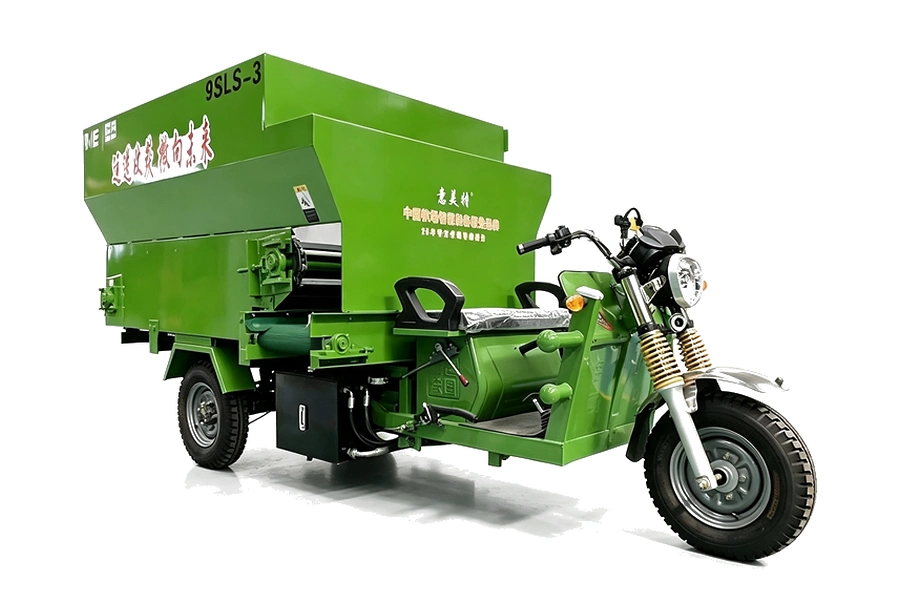
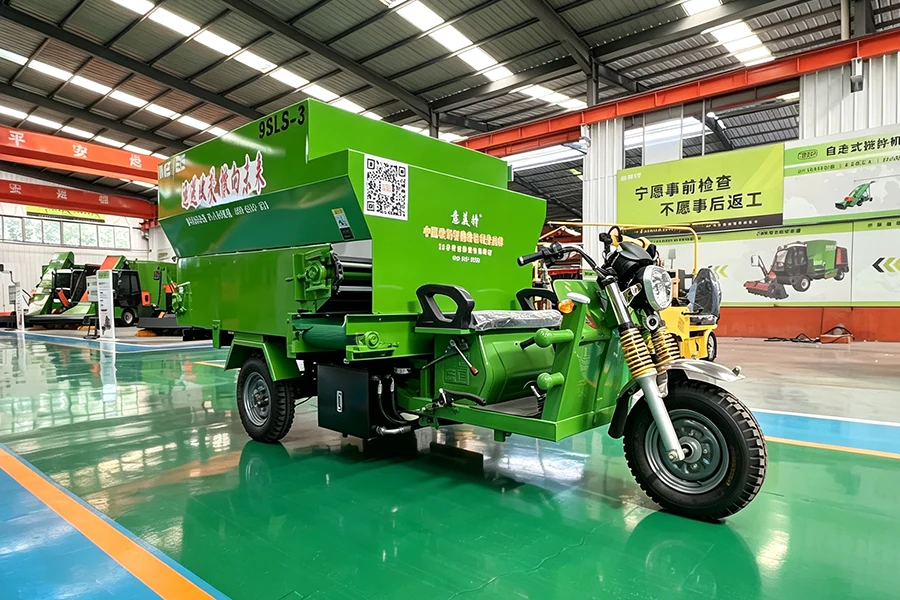
LTSZ lists the Electric Feed Spreader within its livestock equipment portfolio. The product page records Model: 9DSL-3; Transmission Mode: Hydraulic Transmission; Discharging Method: Belt Conveying. Treat these entries as a starting point for a configuration discussion and request the current model sheet before placing an order. Confirm that the proposed electric feed spreader arrangement fits the mixer outlet, loading point and receiving feed rail.
For this application, ask the team to weigh the loaded and remaining feed and divide a marked feeding run into equal lengths to compare delivery along the route. Provide a layout drawing, the intended mixed forage or granular feed in the form intended for the selected spreader and the required work window. The quotation should identify included options, service access and the evidence needed for handover. You can also review the LTSZ equipment portfolio to understand adjacent feeding and cleaning stages.
Compare the Options Before Committing
| Decision | What to compare | Evidence to request |
|---|---|---|
| Task fit | loading prepared feed, transporting it and metering it along the bunk | A demonstrated complete work round |
| Material fit | mixed forage or granular feed in the form intended for the selected spreader | Trial conditions and actual observations |
| Site fit | discharge height, delivery side and the width of the feeding passage | Configuration drawing and route survey |
| Performance | delivered mass per pen, discharge continuity and residual material | A reproducible acceptance record |
| Serviceability | conveyor belts, augers, gate edges, chain tensioners and hydraulic hoses | Manual, part numbers and access procedure |
- Confirm the correct discharge side at every pen.
- Measure actual loaded mass and retained residuals.
- Evaluate starts, stops and changes of travel speed.
- Test the densest and most fibrous intended feed separately.
For independent background, read Penn State Extension guidance on feed bunk management. Use this guidance for the management context of feed access. Vehicle capacity and discharge claims still need a configuration-specific demonstration.
Discuss Your Farm Requirement
To discuss electric feed spreader, send your farm layout, daily workload, material details and delivery destination to LTSZ. Ask for a proposed configuration with the operating limits, quotation scope and acceptance checks set out in writing. Include the main constraint identified in this guide so the discussion starts with the job your farm needs to complete.
Frequently Asked Questions
What information is needed to specify electric feed spreader?
To specify electric feed spreader, start with loading prepared feed, transporting it and metering it along the bunk, the daily workload and the available work window. Add drawings of the mixer outlet, loading point and receiving feed rail, material details and the result the farm needs to verify.
How should electric feed spreader performance be checked?
Evaluate electric feed spreader using delivered mass per pen, discharge continuity and residual material as the operating evidence. A practical approach is to weigh the loaded and remaining feed and divide a marked feeding run into equal lengths to compare delivery along the route. Record settings and conditions so the result can be compared with routine work.
Can electric feed spreader be selected from capacity alone?
Capacity must be checked alongside discharge height, delivery side and the width of the feeding passage. Confirm material behavior, access, complete cycle time and support requirements. A nominal figure cannot establish every part of the task.
Which electric feed spreader maintenance points need attention?
Inspect conveyor belts, augers, gate edges, chain tensioners and hydraulic hoses according to the exact model manual. Assign responsibility, use the required isolation procedure and record recurring wear or adjustment needs.
What should a electric feed spreader quotation include?
Request the model and configuration, drawings, current specifications, included options, delivery scope, training, spare parts and service terms. Agree the acceptance method before ordering.