جدول المحتويات
Telehandler Lifting Capacity: Define the Farm Requirement
Telehandler lifting capacity should be evaluated against a defined job: collecting, traveling with and placing a load using an approved attachment. Start with the attachment-specific load chart and the actual ground conditions and the material handled on an ordinary working day. Use the checks below to establish the operating limits and the evidence needed before choosing a configuration.
Telehandler capacity changes across the working envelope. A machine that lifts a load close to its chassis may not be able to place it at the required forward reach. The chart, approved attachment, tire specification, stabilizer condition where fitted and ground conditions all matter. Plan pedestrian separation and travel with the boom in the manufacturer’s approved position. Dimensions and turning clearance also deserve a measured route survey before selecting a machine for an existing farm.
Telehandler Lifting Capacity: Check capacity at the required reach and height
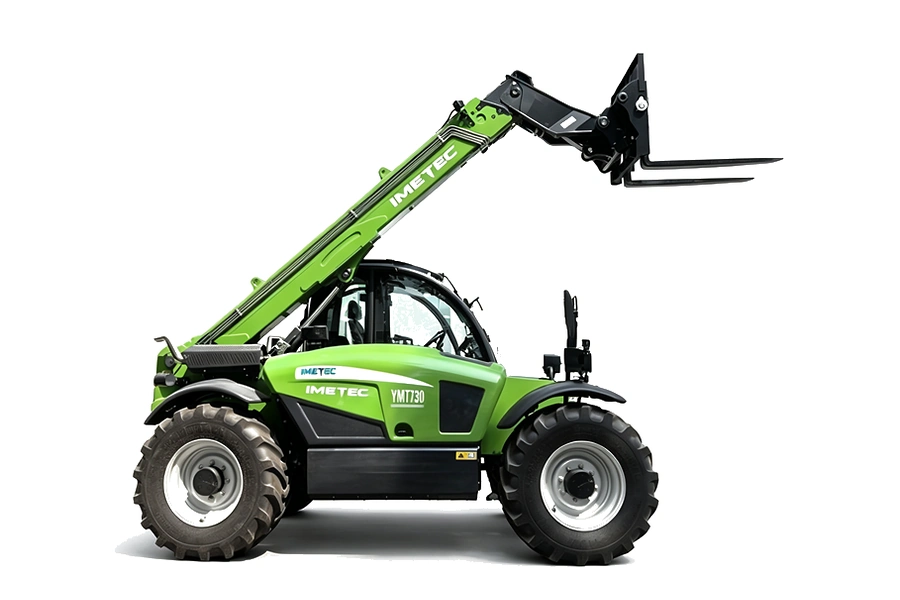
Evaluate telehandler lifting capacity at the actual pickup and placement positions. List the verified load mass, load centre, horizontal reach and lift height for each routine job. Obtain the load chart for the exact machine and attachment. Maximum working height describes only one dimension of the operating envelope and does not establish the load permitted at that height.
A practical telehandler lifting capacity review follows the proposed lift on the applicable chart with a competent operator. Confirm the attachment identification and any required tire or stabilizer conditions. Inspect ground support, overhead obstructions and the space needed to position telehandler lifting capacity. Do not extend a permitted lift condition to a different attachment or reach without checking the corresponding information.
After establishing permitted lift conditions, evaluate how many complete handling cycles fit the work window. Include pickup alignment, travel, placement and the return trip. A larger headline capacity may offer little benefit if an awkward approach limits the task. Agree a planned trial within the approved envelope and keep the load details with its results.
Telehandler Lifting Capacity: Survey clearance at the awkward parts of the route
A useful telehandler lifting capacity layout survey begins at the narrowest doorway and the most constrained turn, rather than the widest alley. Record clear width, clear height, floor changes, curb positions and places where other vehicles wait. Draw the route through the attachment coupler, receiving stack and farm travel route. Include the space needed while loading or unloading because the operating envelope can be larger than the parked dimensions.
Walk the intended route with the regular operator. Mark animal crossings, pedestrian doors, drainage channels and overhead services. For telehandler lifting capacity, the relevant restriction is the attachment-specific load chart and the actual ground conditions. Ask for the exact configuration’s dimensions and a turning-envelope drawing. Use that drawing to assess the route with realistic obstructions in place. A nominal turning radius does not by itself prove that the rear or attachment clears a wall.
Set a trial plan for the difficult locations and decide where an observer can stand safely. Document any proposed gate relocation, floor repair or traffic separation. Assign responsibility for those changes before delivery. Repeat the route assessment after construction or a change in attachment. The route remains an operating condition that needs upkeep, rather than a one-time measurement stored with the quotation.
Telehandler Lifting Capacity: Document settings and controlled fault recovery
For telehandler lifting capacity, identify each setting that changes material flow, travel, timing or task allocation. Record the approved initial values and the person authorized to change them. Relate settings to pallets, bales or loose materials with verified load characteristics and the attachment-specific load chart and the actual ground conditions. Labels such as precise control are not enough; the farm needs to know the adjustable range and the effect on the actual task.
Observe the telehandler lifting capacity controls during a normal cycle and a supervised interruption. Check whether telehandler lifting capacity remembers its position or allocation and what the operator must verify before resuming. Preserve the fault message and task state. An emergency stop is a protective function, not a routine method for reaching into equipment or skipping the required isolation procedure.
Keep a change log with the original setting, the reason for change and the measured result. If several operators use telehandler lifting capacity, define how approved settings are restored at shift start. Prevent informal adjustments from becoming a substitute for a material or capacity review. Ask the supplier to demonstrate the safe recovery sequence for the supplied configuration.
Telehandler Lifting Capacity: Check the existing farm before choosing a retrofit
For a telehandler lifting capacity retrofit, document the current equipment, utilities and structures before requesting a replacement. Keep the existing bottleneck separate from problems that only appear during unusual events. Measure the attachment coupler, receiving stack and farm travel route and collect a recent record of load mass, required reach, lift height and repeatable cycle time. Those observations establish whether the replacement needs more capacity, better access, different controls or a more dependable service arrangement.
List every physical change required for telehandler lifting capacity: access widening, loading-point adjustment, electrical work, floor repair or a revised receiving area. Ask who designs and approves each change. Existing structures may limit the available options even when a larger machine appears attractive. Avoid using a supplier’s standard drawing as proof that an old farm floor or electrical supply can support the installation.
Plan the changeover around essential daily work. Decide when the old system is withdrawn, how the new system will be tested and which fallback remains available. Keep temporary instructions separate from the final operating procedure. After a short period of routine use, compare the new process with the original baseline and close any unresolved interface problems.
Telehandler Lifting Capacity: Commission the interfaces before routine operation
Commission telehandler lifting capacity in stages: delivery inspection, utility verification, prescribed no-load checks and representative working trials. Obtain the manufacturer’s sequence rather than inventing one from a similar machine. Confirm the attachment coupler, receiving stack and farm travel route before loading normal material. Keep essential farm work on the existing or fallback method until the new arrangement has completed the agreed checks.
During the telehandler lifting capacity working trial, record load mass, required reach, lift height and repeatable cycle time, operator interventions and any departure from the agreed conditions. Check the attachment-specific load chart and the actual ground conditions against the supplied configuration. Investigate leaks, unusual noise, unreliable readings or repeated blockages before increasing the workload. A brief successful run is a useful step, but it does not replace testing the normal sequence of loading, work, unloading and restart.
Close commissioning with practical training, final settings and a list of open items. Assign ownership and a retest method to each unresolved point. Retain the test material conditions and configuration identifiers so the results remain interpretable later. Review performance after an agreed period of routine use to find interface problems that a short first-day trial could miss.
A dairy barn with distinct feeding and milking windows
Map when cows leave and return to each pen before arranging machine movements. Feed access, cross passages and the cleaning schedule may compete for the same short time window. Keep lactating, dry and transition groups identifiable in the work record. A change in group count should update the workload sheet rather than remain an informal instruction to the next operator. During the trial, observe the busy period as well as the quiet one. Equipment that fits an empty alley may need a different route when animals, staff and other vehicles are moving.
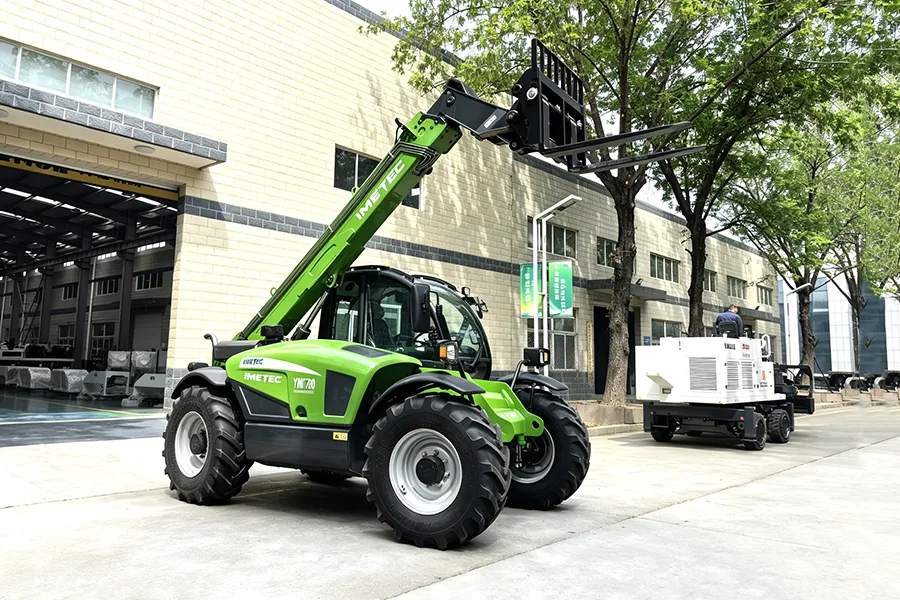
A Worked Planning Example for Telehandler Lifting Capacity
If a task requires placing a verified 1,200 kg load at a stated horizontal reach, the decision must use the chart for that reach, lift height and fitted attachment. A headline maximum lifting capacity cannot answer the question. Attachment mass and the load centre affect the configuration. The LTSZ product page lists a 7 m maximum working height for the MTS-735, but that figure alone establishes no permitted load at 7 m or at any horizontal reach. Request the actual chart.
فحوصات التكوين والأدلة الداعمة
يسرد LTSZ معالج الهاتف within its livestock equipment portfolio. The product page records Model: MTS-735; Vehicle Dimensions: 4936*2300*2550mm; Wheelbase: 2.85m. Treat these entries as a starting point for a configuration discussion and request the current model sheet before placing an order. Confirm that the proposed telehandler lifting capacity arrangement fits the attachment coupler, receiving stack and farm travel route.
For this application, ask the team to have a competent operator demonstrate the required placement using the correct attachment and the applicable load chart, with people kept clear. Provide a layout drawing, the intended pallets, bales or loose materials with verified load characteristics and the required work window. The quotation should identify included options, service access and the evidence needed for handover. You can also review the محفظة معدات LTSZ لفهم مراحل التغذية والتنظيف المجاورة.
قارن الخيارات قبل الالتزام
| قرار | ماذا تقارن | الأدلة للطلب |
|---|---|---|
| تناسب المهمة | collecting, traveling with and placing a load using an approved attachment | جولة عمل كاملة مثبتة |
| تناسب المواد | pallets, bales or loose materials with verified load characteristics | ظروف المحاكمة والملاحظات الفعلية |
| تناسب الموقع | the attachment-specific load chart and the actual ground conditions | رسم التكوين ومسح الطريق |
| أداء | load mass, required reach, lift height and repeatable cycle time | سجل قبول قابل للتكرار |
| إمكانية الخدمة | boom pads, pins, couplers, hydraulic hoses, tires and lifting attachments | الدليل وأرقام الأجزاء وإجراءات الوصول |
- Obtain the load chart for the exact machine and attachment.
- Record load mass, load centre, lift height and horizontal reach.
- Check ground conditions and overhead obstructions.
- Use trained, authorized operators and a planned pedestrian exclusion area.
للحصول على خلفية مستقلة، اقرأ HSE guidance on agricultural telehandlers. HSE discusses training, attachments, visibility and safe operation. Apply the requirements of the destination jurisdiction and the exact machine manual as well.
ناقش متطلبات مزرعتك
To discuss telehandler lifting capacity, send your farm layout, daily workload, material details and delivery destination to LTSZ. اطلب تكوينًا مقترحًا يتضمن حدود التشغيل ونطاق عرض الأسعار وفحوصات القبول المنصوص عليها كتابيًا. قم بتضمين القيد الرئيسي المحدد في هذا الدليل حتى تبدأ المناقشة بالوظيفة التي تحتاج مزرعتك إلى إكمالها.
الأسئلة المتداولة
What information is needed to specify telehandler lifting capacity?
To specify telehandler lifting capacity, start with collecting, traveling with and placing a load using an approved attachment, the daily workload and the available work window. Add drawings of the attachment coupler, receiving stack and farm travel route, material details and the result the farm needs to verify.
How should telehandler lifting capacity performance be checked?
Evaluate telehandler lifting capacity using load mass, required reach, lift height and repeatable cycle time as the operating evidence. A practical approach is to have a competent operator demonstrate the required placement using the correct attachment and the applicable load chart, with people kept clear. Record settings and conditions so the result can be compared with routine work.
Can telehandler lifting capacity be selected from capacity alone?
Capacity must be checked alongside the attachment-specific load chart and the actual ground conditions. Confirm material behavior, access, complete cycle time and support requirements. A nominal figure cannot establish every part of the task.
Which telehandler lifting capacity maintenance points need attention?
Inspect boom pads, pins, couplers, hydraulic hoses, tires and lifting attachments according to the exact model manual. Assign responsibility, use the required isolation procedure and record recurring wear or adjustment needs.
What should a telehandler lifting capacity quotation include?
اطلب النموذج والتكوين والرسومات والمواصفات الحالية والخيارات المضمنة ونطاق التسليم والتدريب وقطع الغيار وشروط الخدمة. الموافقة على طريقة القبول قبل الطلب.