Tabla de contenidos
Electric Feed Pusher: Define the Farm Requirement
Electric feed pusher should be evaluated against a defined job: returning displaced feed to the reachable feeding edge. Start with feed-rail geometry, animal access and safe passing clearance and the material handled on an ordinary working day. Use the checks below to establish the operating limits and the evidence needed before choosing a configuration.
A feed pusher changes feed position. It does not formulate the ration, replace fresh feed or make spoiled feed suitable for use. The useful result is feed accessible along the occupied bunk, especially at the times animals return to it. A narrow alley, uneven curb or deep windrow can change the result even when a machine completes its programmed route. Check animal behavior and the actual feed edge rather than treating distance traveled as the sole measure of success.
Electric Feed Pusher: Trial the material the farm really handles
The electric feed pusher material trial should use the farm’s actual fresh ration and the remaining feed windrow from normal farm storage. Record moisture condition, visible fibers, lumps, foreign material and measured density where relevant. Do not choose an unusually easy sample simply to complete the demonstration. The purpose is to understand how electric feed pusher behaves with the range the farm expects to handle.
Run separate electric feed pusher observations for the usual material and the most difficult permitted material. Watch the flow through the feed rail, alley surface and charging or parking position, then collect completed push passes, reachable feed and intervention time. Record bridging, wrapping, clumping, segregation and any need to intervene. A machine that works well with one material can require different settings or components for another. Confirm compatibility in writing when the supplier proposes a change.
Keep samples or clear photographs and a short condition record with the trial results. Establish the conditions that require a settings review, such as a new forage source or a wetter bedding supply. Do not clear a blockage by reaching into moving equipment. Use the prescribed isolation and recovery procedure, and report frequent blockages as a suitability issue rather than accepting them as unavoidable operator work.
Electric Feed Pusher: Review operating conditions when the season changes
Seasonal planning for electric feed pusher starts with the conditions that actually change: material moisture, ambient temperature, route traction, daylight, workload or storage access. Identify which changes affect feed-rail geometry, animal access and safe passing clearance. Compare the normal work record with the demanding season, using the same definitions for completed push passes, reachable feed and intervention time. Avoid treating a convenient summer demonstration as proof of winter suitability.
For electric feed pusher, inspect push plates, brushes, auger edges, tires and charging contacts and the relevant power, hydraulic or charging system before the seasonal peak. Obtain the manufacturer’s temperature and storage limits. Trial the farm’s actual fresh ration and the remaining feed windrow in representative condition where it can be done safely. Do not compensate for poor traction or material flow by exceeding load or speed limits. Adjust the work schedule or configuration through the approved procedure.
Prepare an interruption plan for unsuitable ground, frozen connections, unusually wet material or reduced charging opportunity as applicable. Name the person who decides that the normal task must pause. Record seasonal settings so they do not remain in use after the conditions change. Review the outcome after the peak period and retain the observations for the next planning cycle.
Electric Feed Pusher: Inspect wear according to the material path
Inspect electric feed pusher durability at the points that contact the farm’s actual fresh ration and the remaining feed windrow and carry repeated load. Focus on push plates, brushes, auger edges, tires and charging contacts. Ask which materials and component thicknesses belong to the quoted model, and which surfaces are replaceable. A heavy overall machine weight or a thick panel in one location does not establish the service life of the entire system.
For electric feed pusher, look for accessible adjustment points, protected bearings, drainage, corrosion traps and the time needed to replace a wear item. Compare those details with the farm’s cleaning routine and material abrasiveness. Record initial condition at delivery so later wear can be assessed against usage. Avoid interpreting a product photograph as evidence of hidden material quality.
Realice un seguimiento del desgaste durante intervalos operativos constantes e investigue un deterioro rápido o desigual. La desalineación, el material inadecuado o la sobrecarga repetida pueden cambiar el resultado. Siga el procedimiento de reparación aprobado y reemplace los componentes críticos para la seguridad con piezas autorizadas. Una comparación de durabilidad útil combina el diseño de componentes, el acceso al servicio y la evidencia operativa en lugar de depender de una etiqueta general de servicio pesado.
Electric Feed Pusher: Plan routes around access and task priorities
Build the electric feed pusher route from actual loading and receiving points, then add the travel required between them. Mark cross passages, animal movements, pedestrian doors, gates and waiting locations. Evaluate the feed rail, alley surface and charging or parking position at the busiest time of day. A short route on a plan can still produce delays if it crosses the same passage used by another essential task.
For electric feed pusher, time productive travel separately from repositioning and waiting. Check visibility and turning clearance with electric feed pusher. Identify places where a one-way rule or a dedicated waiting area would make the work more predictable. Do not use a route that relies on staff squeezing past a moving machine. Agree how gates and temporary obstacles are managed.
Record the approved route and review it after a layout change. Automatic route systems need controlled map changes and an exception procedure, while operator-driven equipment needs clear instructions and training. Compare route changes using completed push passes, reachable feed and intervention time and complete cycle time. Choose a slightly longer route when it provides the necessary access and a workable separation of activities.
Electric Feed Pusher: Keep material streams and contact surfaces separated
Define the electric feed pusher cleaning objective before choosing a method. Remove material that affects operation, protect clean-feed or bedding streams and prevent residue from one job entering an incompatible next job. Identify the contact surfaces and collection points around the feed rail, alley surface and charging or parking position. Record whether the machine is dedicated to one task or shared across different materials.
For electric feed pusher, follow the manufacturer’s cleaning and isolation instructions. Confirm what may be washed, how electrical and bearing areas are protected and where washwater goes. Dry scraping, brushing or washing may be appropriate in different places. More water or pressure is not automatically better. Inspect push plates, brushes, auger edges, tires and charging contacts after cleaning for residue, damage and trapped moisture.
Verifique el resultado antes de reiniciar y antes de cambiar a otra corriente de material. Utilice una simple aprobación que identifique la tarea, el método, el operador y cualquier defecto encontrado. Una máquina visualmente limpia no establece un resultado microbiológico, por lo que no haga afirmaciones de higiene más allá del método de verificación de la granja. Una limpieza frecuente y difícil puede indicar que es necesario mejorar el acceso o la configuración elegida.
Una granja de ovejas con lotes más pequeños y acceso más estrecho
Evaluate the smallest routine group as well as peak demand. Equipment sized only for a large cattle batch may not handle a small sheep ration effectively, and a large vehicle may struggle at low rails or narrow entrances. Measure the actual discharge and pickup geometry. The farm’s nutritionist should set species-appropriate feed and mineral requirements. Keep tools and material streams identifiable when cattle and sheep share facilities. Include time for cleaning and any required separation between groups in the trial, instead of assuming that a small payload automatically means a short job.

A Worked Planning Example for Electric Feed Pusher
For illustration, a 180 m feeding line pushed eight times per day requires 1,440 m of productive travel. That distance excludes the return leg, cross passages, charging access and time spent waiting for gates. A route log should separate those elements. If a manual pass currently occupies 15 minutes, eight passes represent two staff-hours, but an automatic unit still needs inspection, cleaning and exception handling. Only measured net time should enter a savings calculation.
Verificaciones de configuración y evidencia de respaldo
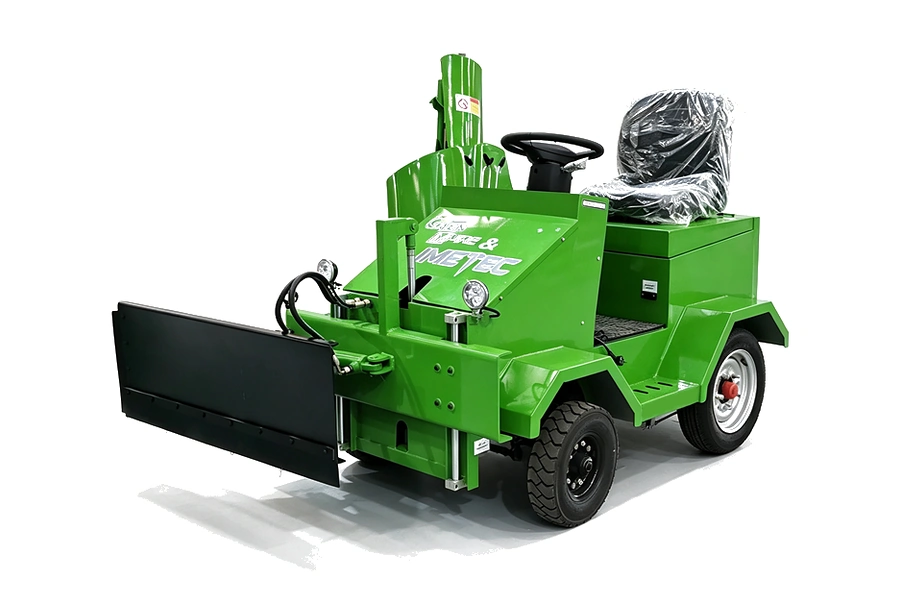
LTSZ enumera el Empujador de alimentación eléctrica within its livestock equipment portfolio. The product page records Model: 9DT-48V; Drive Type: Rear-wheel Drive; Travel Mode: Electric Driving. Treat these entries as a starting point for a configuration discussion and request the current model sheet before placing an order. Confirm that the proposed electric feed pusher arrangement fits the feed rail, alley surface and charging or parking position.
For this application, ask the team to mark observation points along the feed rail and inspect feed reach before and after a pass, including corners and transitions. Provide a layout drawing, the intended the farm’s actual fresh ration and the remaining feed windrow and the required work window. The quotation should identify included options, service access and the evidence needed for handover. You can also review the Portafolio de equipos LTSZ comprender las etapas adyacentes de alimentación y limpieza.
Compare las opciones antes de comprometerse
| Decisión | Qué comparar | Pruebas para solicitar |
|---|---|---|
| Ajuste de tareas | returning displaced feed to the reachable feeding edge | Una ronda de trabajo completa demostrada |
| Ajuste de materiales | the farm’s actual fresh ration and the remaining feed windrow | Condiciones del ensayo y observaciones reales |
| Ajuste del sitio | feed-rail geometry, animal access and safe passing clearance | Dibujo de configuración y estudio de ruta |
| Rendimiento | completed push passes, reachable feed and intervention time | Un registro de aceptación reproducible |
| Utilidad | push plates, brushes, auger edges, tires and charging contacts | Manual, números de pieza y procedimiento de acceso |
- Inspect feed reach at several points along each occupied pen.
- Observe performance against both light and heavy windrows.
- Confirm turnarounds and cross passages stay available.
- Separate scheduled passes from successfully completed passes.
Para obtener antecedentes independientes, lea Guía de Penn State Extension sobre el manejo de literas de piensos. This resource connects feed delivery and push-up routines with animal access. A push schedule should fit the farm’s feeding and milking routines rather than follow an assumed universal interval.
Discuta los requisitos de su granja
To discuss electric feed pusher, send your farm layout, daily workload, material details and delivery destination to LTSZ. Solicite una configuración propuesta con los límites operativos, el alcance de las cotizaciones y las verificaciones de aceptación establecidas por escrito. Incluya la restricción principal identificada en esta guía para que la discusión comience con el trabajo que su granja necesita completar.
Preguntas frecuentes
What information is needed to specify electric feed pusher?
To specify electric feed pusher, start with returning displaced feed to the reachable feeding edge, the daily workload and the available work window. Add drawings of the feed rail, alley surface and charging or parking position, material details and the result the farm needs to verify.
How should electric feed pusher performance be checked?
Evaluate electric feed pusher using completed push passes, reachable feed and intervention time as the operating evidence. A practical approach is to mark observation points along the feed rail and inspect feed reach before and after a pass, including corners and transitions. Record settings and conditions so the result can be compared with routine work.
Can electric feed pusher be selected from capacity alone?
Capacity must be checked alongside feed-rail geometry, animal access and safe passing clearance. Confirm material behavior, access, complete cycle time and support requirements. A nominal figure cannot establish every part of the task.
Which electric feed pusher maintenance points need attention?
Inspect push plates, brushes, auger edges, tires and charging contacts according to the exact model manual. Assign responsibility, use the required isolation procedure and record recurring wear or adjustment needs.
What should a electric feed pusher quotation include?
Solicite el modelo y configuración, planos, especificaciones actuales, opciones incluidas, alcance de entrega, capacitación, repuestos y términos de servicio. Acepte el método de aceptación antes de realizar el pedido.