Оглавление
Self-Propelled TMR Feed Mixer: Define the Farm Requirement
Self-propelled tmr feed mixer should be evaluated against a defined job: loading, weighing, mixing and discharging a complete ration. Start with minimum useful batch size and the available feeding window and the material handled on an ordinary working day. Use the checks below to establish the operating limits and the evidence needed before choosing a configuration.
A mixer must move ingredients through the working chamber rather than merely hold them. Gross hopper volume is different from a validated mixing volume. Long forage, wet silage and dense concentrates occupy space differently, and a change in forage moisture changes the as-fed mass required for the same dry matter. A nutritionist should set the ration and the target particle distribution. The equipment trial establishes whether self-propelled tmr feed mixer can reproduce that recipe under the farm’s loading conditions.
Self-Propelled TMR Feed Mixer: Plan maintenance around accessible wear points
For self-propelled tmr feed mixer, begin the maintenance plan with auger flights, cutting knives, discharge gates and weighing supports. Ask which points require a pre-use inspection, lubrication, adjustment or periodic replacement. Obtain the model-specific intervals and the approved procedures from the manual. A calendar reminder is useful only when the operator can identify the component and reach it using the required safe access method.
Link each self-propelled tmr feed mixer task to a responsible person, a service trigger and a completion record. Record operating hours or another relevant usage measure where the manual requires it. Schedule intrusive work outside the essential farm work window. Isolate electrical, hydraulic, mechanical and stored energy according to self-propelled tmr feed mixer procedure before opening guards or clearing material. A stopped control screen is not evidence that all hazardous energy is isolated.
After maintenance, inspect the work area for loose tools, restored guards and properly secured connections. Carry out the prescribed restart check and note any setting that changed. Track recurring adjustments as a possible defect or operating mismatch rather than normalizing them as daily work. Useful service records explain what was found, what was replaced and whether the original symptom disappeared.
Self-Propelled TMR Feed Mixer: Qualify a supplier against the required configuration
When sourcing self-propelled tmr feed mixer, ask the supplier to explain the proposed configuration against loading, weighing, mixing and discharging a complete ration. Request the exact model, permitted material range, drawings of the loader bucket, mixer inlet and receiving feed wagon and the supporting manuals. Identify whether the company manufactures, integrates or supplies self-propelled tmr feed mixer and which party is responsible for the final specification and service.
Evaluate self-propelled tmr feed mixer evidence in a traceable way. A photograph can show a visible arrangement, while a test record should identify material, settings and results. Ask for a demonstration that collects batch mass, loading error and consistency across discharge samples. Verify model-specific documentation and avoid carrying broad claims about experience or certification into the ordered machine without checking the scope.
Confirm quotation exclusions, delivery responsibilities, warranty terms, training and parts support. Keep written clarifications with the order. A supplier who can explain the limits of a configuration and the evidence needed for selection gives the farm a clearer basis for a decision than one who promises a universal fit. Use the acceptance requirement to close remaining questions.
Self-Propelled TMR Feed Mixer: Evaluate the result throughout the discharge
For self-propelled tmr feed mixer, the discharge test should cover startup, steady flow, stopping and the final residual. Mark the receiving area or divide the run into observation sections. Record batch mass, loading error and consistency across discharge samples and describe forage, silage, concentrates and approved ration additives so results can be compared later. A strong initial flow is not evidence that the complete load arrives evenly or at the correct destination.
Check how self-propelled tmr feed mixer responds to changes in travel or feed settings where those adjustments are permitted. Watch for delayed starts, clumps, retained pockets and continued flow after a stop command. Confirm the discharge side and height against the loader bucket, mixer inlet and receiving feed wagon. If the operator has to make repeated manual corrections, record that time and determine whether the setup is suitable.
Weigh or measure remaining material using an appropriate safe method. Decide how residuals are handled before the next task. Repeat the test after a material or relevant component change. Use the results to establish an approved setting range rather than relying on one successful pass with unusually easy material.
Self-Propelled TMR Feed Mixer: Build the cost model from measured work
Compare self-propelled tmr feed mixer options using annual ownership and operating cost alongside the work they actually complete. List purchase price, freight, site preparation, training, finance where relevant, energy, wear parts, routine service and the fallback method during downtime. Use the same operating hours and workload for every option. Keep assumptions such as annual utilization visible so they can be changed without rebuilding the comparison.
For self-propelled tmr feed mixer, staff time includes supervision, loading, cleaning and dealing with interrupted work. Separate time released from time that becomes a cash saving. If a person still works the same paid shift, the benefit may be additional capacity or a more reliable routine. Measure batch mass, loading error and consistency across discharge samples before and after the trial. Avoid assigning a fixed milk-yield, feed-saving or labor-saving percentage without evidence from the farm.
Calculate at least a low-utilization and a high-utilization case, and vary service cost and downtime independently. If annual net savings are uncertain or negative, show that result directly instead of forcing a payback figure. Check that an inexpensive option does not require unpriced changes to the loader bucket, mixer inlet and receiving feed wagon. A useful cost model shows what would have to be true for the purchase to make economic sense.
Self-Propelled TMR Feed Mixer: Translate the specification sheet into operating limits
Read the self-propelled tmr feed mixer specification sheet as a description of one configuration. Separate dimensions, installed power, permitted load, working output and optional functions. Identify whether each number is a maximum, a nominal value or a result under stated test conditions. Relate the sheet to minimum useful batch size and the available feeding window. Missing conditions deserve a written clarification before two quotations are compared.
For self-propelled tmr feed mixer, confirm the material used to establish any capacity or output claim. Record the exact model, attachments, drive system and discharge arrangement. A label such as automatic, heavy duty or intelligent is not a complete operating requirement. Ask which actions are automatic, which require an operator and what happens when the normal sequence stops. Verify the interface through the loader bucket, mixer inlet and receiving feed wagon with drawings where possible.
Create a comparison row for every requirement and attach the supplier’s evidence. Mark unsupported entries as unconfirmed. Do not carry a specification from a related model into the selected model’s record. When an option changes weight, dimensions or power demand, update the route and utility checks as well. The final order should identify the same configuration that the acceptance trial will assess.
A beef unit handling changing groups and variable forage
Record group sizes and the actual materials used through the production cycle. A machine selected during a low-demand week may face a different payload or route when groups grow. Distinguish dry feed storage, wet material handling and manure traffic on the site plan. Trial traction and discharge under representative conditions without creating unsafe loads. Use a simple group identifier in the equipment log so that delivery or collection records can be traced to the correct area. Reassess the workload when pen allocation or forage supply changes.
A Worked Planning Example for Self-Propelled TMR Feed Mixer
An illustrative 300-cow group receiving 45 kg as fed per head requires 13,500 kg per day. Two deliveries divide that into 6,750 kg per delivery, before any separately agreed allowance. At a measured bulk density of 350 kg/m³, each delivery occupies about 19.3 m³. These are planning assumptions, not recommended intake or a particular mixer rating. Compare that volume with the approved working fill range, then check whether small dry-cow or sheep batches can circulate properly in the same machine.
Проверки конфигурации и подтверждающие доказательства
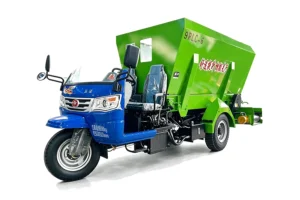
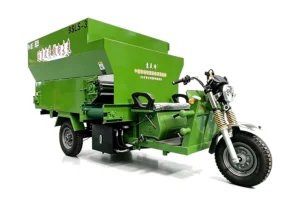
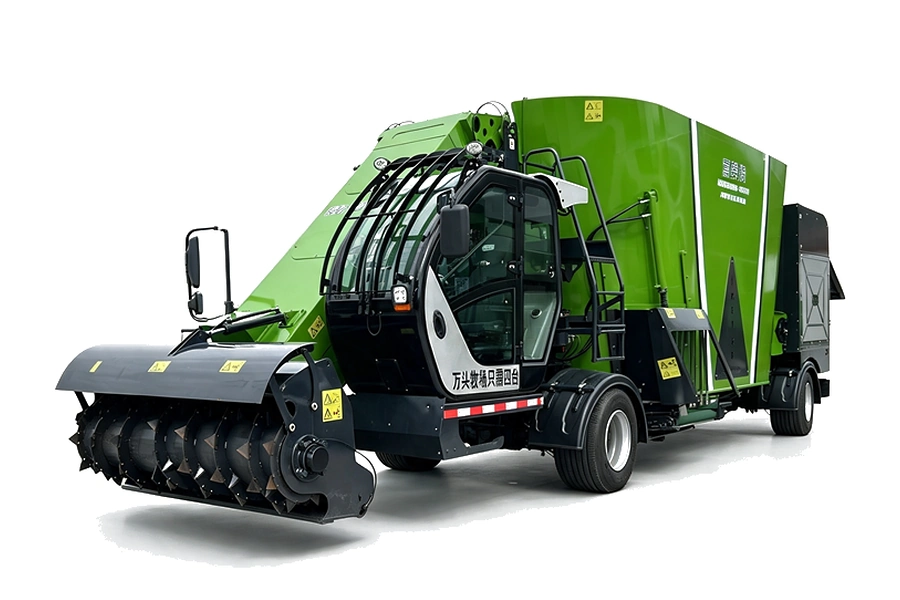
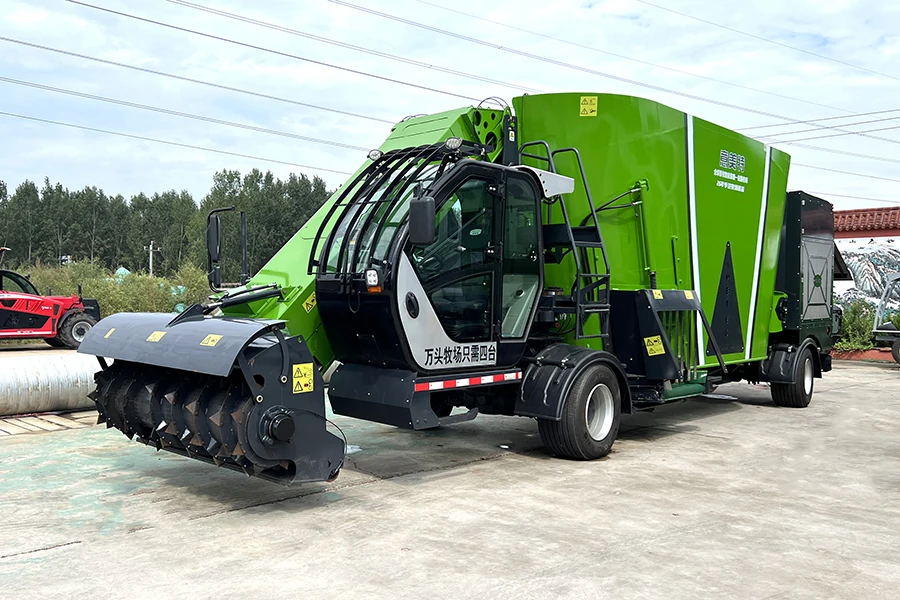
LTSZ перечисляет Самоходный смеситель кормов TMR within its livestock equipment portfolio. The product page records Model Series: 9QJS-30; Quantity of Batteries: 6 pieces; Full Power Working Time: 5-7 hours. Treat these entries as a starting point for a configuration discussion and request the current model sheet before placing an order. Confirm that the proposed self-propelled tmr feed mixer arrangement fits the loader bucket, mixer inlet and receiving feed wagon.
For this application, ask the team to collect equally sized samples at the beginning, middle and end of discharge and compare the particle distribution with the farm nutritionist. Provide a layout drawing, the intended forage, silage, concentrates and approved ration additives and the required work window. The quotation should identify included options, service access and the evidence needed for handover. You can also review the Портфель оборудования ЛТСЗ чтобы понять соседние этапы кормления и очистки.
Сравните параметры перед вводом в эксплуатацию
| Решение | Что сравнивать | Доказательства, которые необходимо запросить |
|---|---|---|
| Подгонка задач | loading, weighing, mixing and discharging a complete ration | Продемонстрированный полный рабочий раунд |
| Материал подходит | forage, silage, concentrates and approved ration additives | Условия испытаний и фактические наблюдения |
| Помещение сайта | minimum useful batch size and the available feeding window | Чертеж конфигурации и обследование маршрута |
| Производительность | batch mass, loading error and consistency across discharge samples | Воспроизводимая запись о приемке |
| Полезность | auger flights, cutting knives, discharge gates and weighing supports | Руководство, номера деталей и процедура доступа |
- Record ingredient target and actual weight for every load.
- Document loading order and the point at which final mixing time begins.
- Compare first, middle and last discharge samples.
- Check a small batch as well as the largest planned batch.
Для получения независимого фона читайте University of Minnesota Extension guidance on feeding total mixed rations. The guidance explains why ration formulation, ingredient order and daily management matter. Use the mixer manual and an on-farm trial to establish the settings for a particular configuration.
Обсудите требования к вашей ферме
To discuss self-propelled tmr feed mixer, send your farm layout, daily workload, material details and delivery destination to ЛТШ. Попросите предлагаемую конфигурацию с операционными ограничениями, объемом котировок и проверками приемки, изложенными в письменной форме. Включите основное ограничение, указанное в этом руководстве, чтобы обсуждение началось с работы, которую необходимо выполнить вашей ферме.
Часто задаваемые вопросы
What information is needed to specify self-propelled tmr feed mixer?
To specify self-propelled tmr feed mixer, start with loading, weighing, mixing and discharging a complete ration, the daily workload and the available work window. Add drawings of the loader bucket, mixer inlet and receiving feed wagon, material details and the result the farm needs to verify.
How should self-propelled tmr feed mixer performance be checked?
Evaluate self-propelled tmr feed mixer using batch mass, loading error and consistency across discharge samples as the operating evidence. A practical approach is to collect equally sized samples at the beginning, middle and end of discharge and compare the particle distribution with the farm nutritionist. Record settings and conditions so the result can be compared with routine work.
Can self-propelled tmr feed mixer be selected from capacity alone?
Capacity must be checked alongside minimum useful batch size and the available feeding window. Confirm material behavior, access, complete cycle time and support requirements. A nominal figure cannot establish every part of the task.
Which self-propelled tmr feed mixer maintenance points need attention?
Inspect auger flights, cutting knives, discharge gates and weighing supports according to the exact model manual. Assign responsibility, use the required isolation procedure and record recurring wear or adjustment needs.
What should a self-propelled tmr feed mixer quotation include?
Запросить модель и конфигурацию, чертежи, текущие спецификации, включенные опции, объем поставки, обучение, запасные части и условия обслуживания.Согласуйте метод приемки перед заказом.