Table of Contents
Automatic Intelligent Manure Removal Equipment: Define the Farm Requirement
Automatic intelligent manure removal equipment should be evaluated against a defined job: collecting manure from the barn alley, carrying it and unloading at the receiving point. Start with alley width, floor transitions, traction and the unloading interface and the material handled on an ordinary working day. Use the checks below to establish the operating limits and the evidence needed before choosing a configuration.
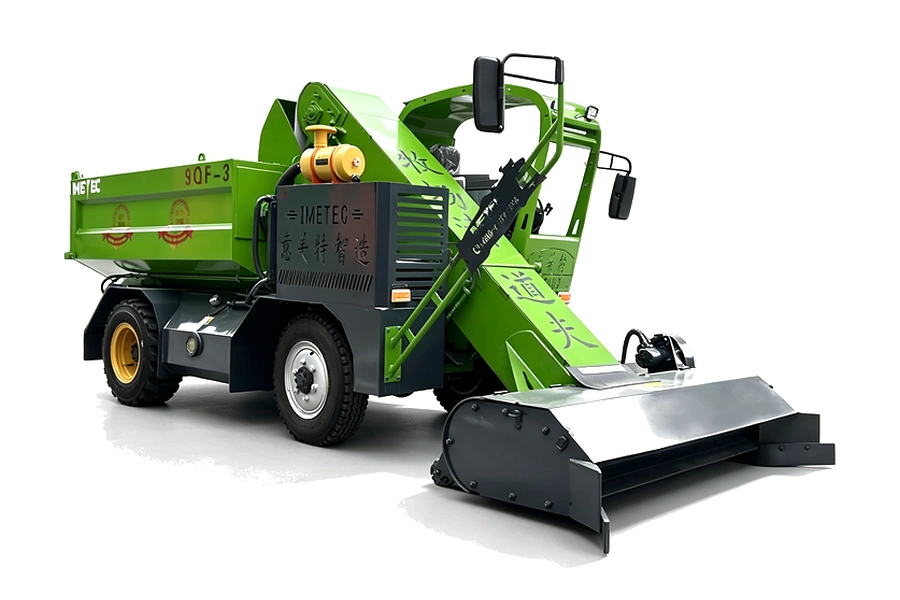
Cleaning performance depends on how the pickup system follows the floor and transfers real manure into the tank. Four-wheel drive can help traction in some conditions, but it does not remove floor-loading limits or make a slippery route safe. Long fibers, sand and bedding fragments can change collection behavior and wear. Match the cleaning head to curb details, floor slots and changes in level. The receiving station must accept the discharge without creating an unmanaged spill or forcing unsafe positioning.
Automatic Intelligent Manure Removal Equipment: Compare configurations against the same task
Compare automatic intelligent manure removal equipment configurations using one defined work round and the same manure with the farm’s real moisture, fibers and bedding carryover. Begin with alley width, floor transitions, traction and the unloading interface, then assess the pickup head, barn floor and manure reception point, staffing, measurement, maintenance and service access. A configuration that excels at maximum output may be inconvenient for a small routine task. State the automatic intelligent manure removal equipment task before deciding which option has the stronger fit.
Ask for demonstrations under comparable conditions. For each automatic intelligent manure removal equipment option, record cleared area, remaining residue, collected payload and complete cycle time, full cycle time and interventions. Note which result comes from a measured trial and which remains a supplier statement. Separate features included in the base price from options. Do not compare a fully configured demonstration unit with a lower-priced quotation that omits the relevant feature.
Use a short decision table with evidence and unresolved questions. Avoid a numerical score that disguises a missing mandatory capability. If an option cannot pass a required access, material or safety condition, resolve that item before comparing preferences. The purchase decision should remain understandable to the operator and service team who will use automatic intelligent manure removal equipment.
Automatic Intelligent Manure Removal Equipment: Keep records that answer a maintenance or feeding question
A practical automatic intelligent manure removal equipment record identifies date, operator, machine, task, material condition and settings. Add cleared area, remaining residue, collected payload and complete cycle time using a consistent measurement method. Keep the form short enough to complete at the work site. Do not collect detailed data without deciding which operating, service or procurement question it will help answer.
For automatic intelligent manure removal equipment, preserve target and actual results separately. Record interventions, incomplete tasks and changed settings instead of overwriting them with the final successful result. Link photographs or fault codes to the same event identifier. This makes it possible to investigate a cleaner-looking pass that leaves persistent residue at curbs and transitions and prevents a later review from assuming the entire round ran normally.
Review records with operators at a useful interval and assign action to recurring exceptions. Keep original observations intact when adding a diagnosis or correction. Use the data to refine alley width, floor transitions, traction and the unloading interface and the service plan. A simple, consistent log is more valuable than an elaborate spreadsheet with missing definitions and unverified zero entries.
Automatic Intelligent Manure Removal Equipment: Evaluate the result throughout the discharge
For automatic intelligent manure removal equipment, the discharge test should cover startup, steady flow, stopping and the final residual. Mark the receiving area or divide the run into observation sections. Record cleared area, remaining residue, collected payload and complete cycle time and describe manure with the farm’s real moisture, fibers and bedding carryover so results can be compared later. A strong initial flow is not evidence that the complete load arrives evenly or at the correct destination.
Check how automatic intelligent manure removal equipment responds to changes in travel or feed settings where those adjustments are permitted. Watch for delayed starts, clumps, retained pockets and continued flow after a stop command. Confirm the discharge side and height against the pickup head, barn floor and manure reception point. If the operator has to make repeated manual corrections, record that time and determine whether the setup is suitable.
Weigh or measure remaining material using an appropriate safe method. Decide how residuals are handled before the next task. Repeat the test after a material or relevant component change. Use the results to establish an approved setting range rather than relying on one successful pass with unusually easy material.
Automatic Intelligent Manure Removal Equipment: Check the existing farm before choosing a retrofit
For an automatic intelligent manure removal equipment retrofit, document the current equipment, utilities and structures before requesting a replacement. Keep the existing bottleneck separate from problems that only appear during unusual events. Measure the pickup head, barn floor and manure reception point and collect a recent record of cleared area, remaining residue, collected payload and complete cycle time. Those observations establish whether the replacement needs more capacity, better access, different controls or a more dependable service arrangement.
List every physical change required for automatic intelligent manure removal equipment: access widening, loading-point adjustment, electrical work, floor repair or a revised receiving area. Ask who designs and approves each change. Existing structures may limit the available options even when a larger machine appears attractive. Avoid using a supplier’s standard drawing as proof that an old farm floor or electrical supply can support the installation.
Plan the changeover around essential daily work. Decide when the old system is withdrawn, how the new system will be tested and which fallback remains available. Keep temporary instructions separate from the final operating procedure. After a short period of routine use, compare the new process with the original baseline and close any unresolved interface problems.
Automatic Intelligent Manure Removal Equipment: Agree the acceptance trial before ordering
Turn the automatic intelligent manure removal equipment quotation into a short list of observable results. Define the material as manure with the farm’s real moisture, fibers and bedding carryover, describe the intended operating conditions and identify cleared area, remaining residue, collected payload and complete cycle time as the evidence to collect. Separate mandatory results from preferences. Agree who supplies the test material, who operates automatic intelligent manure removal equipment and who records the measurements so that the demonstration can be reproduced.
Use a normal task, a small task and a demanding but permitted task in the automatic intelligent manure removal equipment trial. The practical method is to mark representative floor sections, compare residue after a pass and time the full collection-to-unloading cycle with the intended material. Record failures and operator interventions as carefully as successful runs. A shortened supplier demonstration should not conceal loading, cleanup or return travel. If a result depends on a particular setting, include that setting in the acceptance record and operator handover.
Decide how a failed item will be corrected and retested before automatic intelligent manure removal equipment enters routine use. Keep open issues assigned to a named party with a target date. Acceptance should confirm the supplied configuration against the agreed requirement, not expand the machine’s permitted limits. Do not treat a marketing video or a test with different material as evidence that the farm’s requirement has been met.
A dairy barn with distinct feeding and milking windows
Map when cows leave and return to each pen before arranging machine movements. Feed access, cross passages and the cleaning schedule may compete for the same short time window. Keep lactating, dry and transition groups identifiable in the work record. A change in group count should update the workload sheet rather than remain an informal instruction to the next operator. During the automatic intelligent manure removal equipment trial, observe the busy period as well as the quiet one. Equipment that fits an empty alley may need a different route when animals, staff and other vehicles are moving.
A Worked Planning Example for Automatic Intelligent Manure Removal Equipment
A hypothetical 600 m² alley cleaned three times each day represents 1,800 m² of planned daily coverage. A trial speed or advertised pickup rate cannot establish daily output on its own. Include turning, animal movements, travel to the reception point, unloading and washdown. If one complete cycle occupies 35 minutes instead of a 20-minute pickup pass, the difference materially changes staffing and fleet capacity. Record both figures without treating the shorter one as the complete task.
Configuration Checks and Supporting Evidence
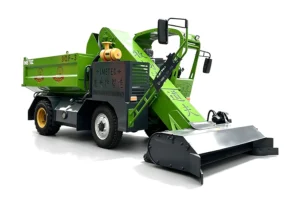
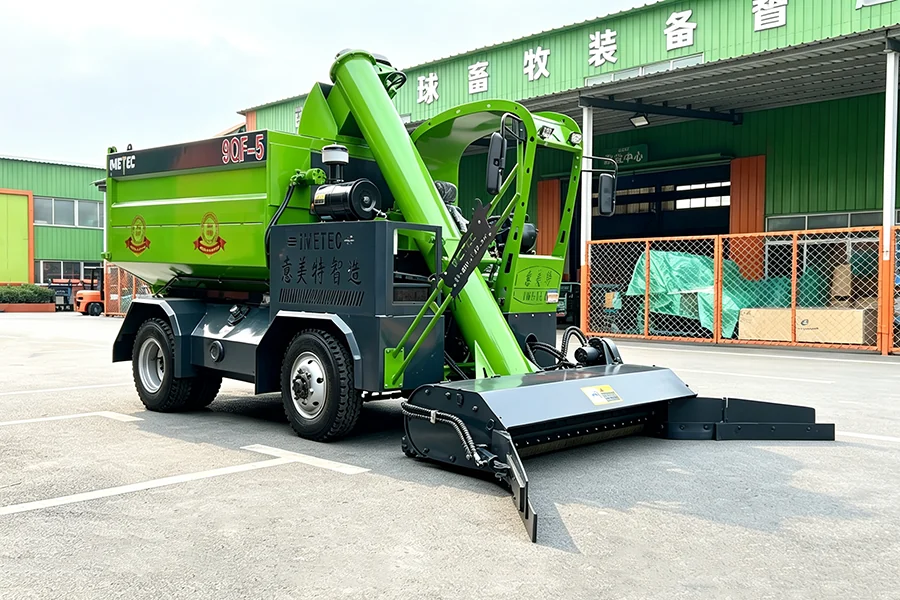
LTSZ lists the Auger Manure Collector within its livestock equipment portfolio. The product page records Model: 9QF-5; Drive Mode: Four-wheel Drive (4WD); Steering Mode: Front-wheel Steering. Treat these entries as a starting point for a configuration discussion and request the current model sheet before placing an order. Confirm that the proposed automatic intelligent manure removal equipment arrangement fits the pickup head, barn floor and manure reception point.
The linked catalogue entry does not confirm every feature named in this search term. Ask LTSZ whether the requested drive or automation arrangement is available for the proposed model. Keep that requirement unconfirmed until the supplier provides configuration-specific documentation and a suitable trial.
For this application, ask the team to mark representative floor sections, compare residue after a pass and time the full collection-to-unloading cycle with the intended material. Provide a layout drawing, the intended manure with the farm’s real moisture, fibers and bedding carryover and the required work window. The quotation should identify included options, service access and the evidence needed for handover. You can also review the LTSZ equipment portfolio to understand adjacent feeding and cleaning stages.
Compare the Options Before Committing
| Decision | What to compare | Evidence to request |
|---|---|---|
| Task fit | collecting manure from the barn alley, carrying it and unloading at the receiving point | A demonstrated complete work round |
| Material fit | manure with the farm’s real moisture, fibers and bedding carryover | Trial conditions and actual observations |
| Site fit | alley width, floor transitions, traction and the unloading interface | Configuration drawing and route survey |
| Performance | cleared area, remaining residue, collected payload and complete cycle time | A reproducible acceptance record |
| Serviceability | pickup edges, augers, seals, hydraulic hoses, tires and tipping pivots | Manual, part numbers and access procedure |
- Check edges and transitions as well as the middle of the alley.
- Include the complete unload-and-return cycle in output measurements.
- Keep clean-feed routes separated from manure traffic.
- Inspect the pickup with power and stored energy safely isolated.
For independent background, read HSE guidance on agricultural machinery. The guidance supports planned machinery use and maintenance. It does not validate a particular collector’s performance or authorize entry into manure storage.
Discuss Your Farm Requirement
To discuss automatic intelligent manure removal equipment, send your farm layout, daily workload, material details and delivery destination to LTSZ. Ask for a proposed configuration with the operating limits, quotation scope and acceptance checks set out in writing. Include the main constraint identified in this guide so the discussion starts with the job your farm needs to complete.
Frequently Asked Questions
What information is needed to specify automatic intelligent manure removal equipment?
To specify automatic intelligent manure removal equipment, start with collecting manure from the barn alley, carrying it and unloading at the receiving point, the daily workload and the available work window. Add drawings of the pickup head, barn floor and manure reception point, material details and the result the farm needs to verify.
How should automatic intelligent manure removal equipment performance be checked?
Evaluate automatic intelligent manure removal equipment using cleared area, remaining residue, collected payload and complete cycle time as the operating evidence. A practical approach is to mark representative floor sections, compare residue after a pass and time the full collection-to-unloading cycle with the intended material. Record settings and conditions so the result can be compared with routine work.
Can automatic intelligent manure removal equipment be selected from capacity alone?
Capacity must be checked alongside alley width, floor transitions, traction and the unloading interface. Confirm material behavior, access, complete cycle time and support requirements. A nominal figure cannot establish every part of the task.
Which automatic intelligent manure removal equipment maintenance points need attention?
Inspect pickup edges, augers, seals, hydraulic hoses, tires and tipping pivots according to the exact model manual. Assign responsibility, use the required isolation procedure and record recurring wear or adjustment needs.
What should a automatic intelligent manure removal equipment quotation include?
Request the model and configuration, drawings, current specifications, included options, delivery scope, training, spare parts and service terms. Agree the acceptance method before ordering.