Table of Contents
Livestock Equipment: Define the Farm Requirement
Livestock equipment should be evaluated against a defined job: coordinating feed preparation, delivery, feed access and barn-cleaning tasks. Start with the existing farm layout, staffing and interdependent work windows and the material handled on an ordinary working day. Use the checks below to establish the operating limits and the evidence needed before choosing a configuration.
An equipment plan should start with the farm’s work sequence and constraints. A faster machine creates value when it improves the limiting part of that sequence without transferring the delay elsewhere. Existing gateways, power supplies, material stores and staff skills shape the practical choices. Separate essential capabilities from optional features and identify what evidence will establish that each proposed machine fits its intended task.
Livestock Equipment: Survey clearance at the awkward parts of the route
A useful livestock equipment layout survey begins at the narrowest doorway and the most constrained turn, rather than the widest alley. Record clear width, clear height, floor changes, curb positions and places where other vehicles wait. Draw the route through the handoffs between storage, preparation, barn routes and waste reception. Include the space needed while loading or unloading because the operating envelope can be larger than the parked dimensions.
Walk the intended route with the regular operator. Mark animal crossings, pedestrian doors, drainage channels and overhead services. For livestock equipment, the relevant restriction is the existing farm layout, staffing and interdependent work windows. Ask for the exact configuration’s dimensions and a turning-envelope drawing. Use that drawing to assess the route with realistic obstructions in place. A nominal turning radius does not by itself prove that the rear or attachment clears a wall.
Set a trial plan for the difficult locations and decide where an observer can stand safely. Document any proposed gate relocation, floor repair or traffic separation. Assign responsibility for those changes before delivery. Repeat the route assessment after construction or a change in attachment. The route remains an operating condition that needs upkeep, rather than a one-time measurement stored with the quotation.
Livestock Equipment: Plan expansion without assuming linear output
For livestock equipment, model present demand and future demand as separate cases. More animals or more barns can add travel, group changes and waiting as well as material quantity. Review the existing farm layout, staffing and interdependent work windows in both layouts. A proportional increase in nominal capacity may leave the same bottleneck in the handoffs between storage, preparation, barn routes and waste reception. Identify which part of the process must expand first.
Compare one larger livestock equipment unit, additional work rounds and multiple units where appropriate. Include the smallest group and the planned service downtime in the comparison. A second unit may provide fallback capacity, while one larger machine may simplify staffing but concentrate interruption risk. Use complete cycle records and task completion, bottleneck time and the availability of essential equipment to evaluate the alternatives.
Stage purchases around confirmed demand and the readiness of receiving facilities. Reserve physical access or utility capacity only where it is supported by the expansion plan. After each stage, repeat the interface and acceptance checks. Keep future assumptions visible so the farm does not pay today for an unverified workload that may develop differently.
Livestock Equipment: Verify adjacent equipment and information handoffs
Integration of livestock equipment begins with the physical handoff through the handoffs between storage, preparation, barn routes and waste reception. Confirm heights, sides, flow direction, loading rate and access for cleaning. Identify whether one machine must wait for another to finish. The selected configuration should connect to the actual farm process, not merely share the same broad equipment category.
For livestock equipment, describe any required data exchange separately from material exchange. Specify which system owns group identifiers, target quantities, schedules and completion status. Confirm whether the offered interface is included, supported and documented. A machine described as intelligent does not automatically connect to the farm’s existing software or export the data format it needs.
Test a normal handoff and an interrupted one. Check what happens when material, power or a data connection is unavailable. The operator should be able to identify the task state and use an approved recovery method. Collect task completion, bottleneck time and the availability of essential equipment from both sides where possible and resolve discrepancies before treating the integrated sequence as routine.
Livestock Equipment: Inspect wear according to the material path
Inspect livestock equipment durability at the points that contact the farm’s feed ingredients, bedding and manure in their actual working conditions and carry repeated load. Focus on task-specific contact surfaces, drive components and service access points. Ask which materials and component thicknesses belong to the quoted model, and which surfaces are replaceable. A heavy overall machine weight or a thick panel in one location does not establish the service life of the entire system.
For livestock equipment, look for accessible adjustment points, protected bearings, drainage, corrosion traps and the time needed to replace a wear item. Compare those details with the farm’s cleaning routine and material abrasiveness. Record initial condition at delivery so later wear can be assessed against usage. Avoid interpreting a product photograph as evidence of hidden material quality.
Track wear over consistent operating intervals and investigate uneven or rapid deterioration. Misalignment, unsuitable material or repeated overloading can change the result. Follow the approved repair procedure and replace safety-critical components with authorized parts. A useful durability comparison combines component design, service access and operating evidence instead of relying on a general heavy-duty label.
Livestock Equipment: Check power supply and the full energy cycle
Define the livestock equipment power requirement for the actual configuration, including charging, starting, auxiliary drives and control equipment. Confirm voltage, frequency, protection and connection requirements with the supplier and a qualified installer where appropriate. Relate the available power or charging window to the existing farm layout, staffing and interdependent work windows. Installed power alone does not establish energy used per completed task.
Measure livestock equipment energy across complete work rounds, including waiting and charging losses where the measurement boundary includes them. Record the material, payload and route for comparison. For battery equipment, distinguish nominal battery capacity, usable working time and the reserve required to return to the charger. Confirm temperature limits and the permitted charging arrangement.
Test the response to an interrupted supply using the approved procedure. Decide who receives the alarm and how essential farm work continues. Compare energy cost with maintenance, staffing and availability in the purchase model. Electric equipment may avoid exhaust at the point of use, but that does not establish zero lifecycle emissions or suitability for every indoor space.
A mixed livestock farm sharing machinery between jobs
Create a task order that separates clean feed and bedding from manure work. Attachments, contact surfaces and receiving areas may require different handling and cleaning procedures. Record the changeover time as part of the full job. A shared machine can reduce duplicate investment only if the conflicting tasks fit the available hours. Allocate responsibility for checking livestock equipment before the next use, especially when different teams work on the same day. Evaluate the most awkward interface rather than using the easiest task as the demonstration for the entire farm.
A Worked Planning Example for Livestock Equipment
Imagine a farm with a 90-minute morning feeding window. A mixer completing its batch in 30 minutes does not establish that the whole system can finish in that window. Add ingredient loading, transport, group allocation, discharge and cleaning. If those stages take another 75 minutes, the process needs 105 minutes and misses its target. This illustrative timing exercise shows why a bottleneck survey should precede equipment selection.
Configuration Checks and Supporting Evidence
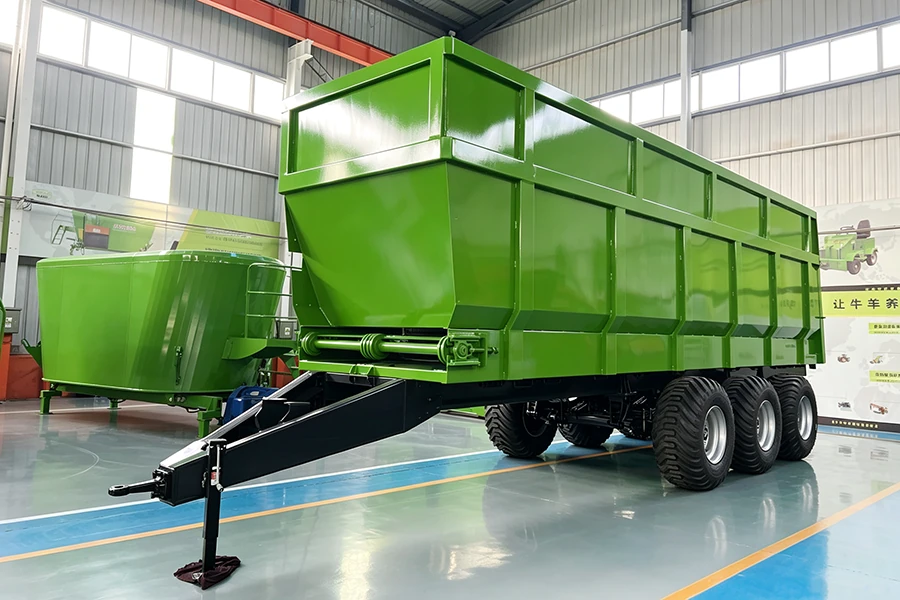
LTSZ lists the Solid Manure Spreader within its livestock equipment portfolio. The product page records Model: 2FGH-20; Matched Power: 150-220HP; Spreading Width: 8-12m. Treat these entries as a starting point for a configuration discussion and request the current model sheet before placing an order. Confirm that the proposed livestock equipment arrangement fits the handoffs between storage, preparation, barn routes and waste reception.
For this application, ask the team to trace one complete working day and record where materials, machines and staff wait for the next task. Provide a layout drawing, the intended the farm’s feed ingredients, bedding and manure in their actual working conditions and the required work window. The quotation should identify included options, service access and the evidence needed for handover. You can also review the LTSZ equipment portfolio to understand adjacent feeding and cleaning stages.
Compare the Options Before Committing
| Decision | What to compare | Evidence to request |
|---|---|---|
| Task fit | coordinating feed preparation, delivery, feed access and barn-cleaning tasks | A demonstrated complete work round |
| Material fit | the farm’s feed ingredients, bedding and manure in their actual working conditions | Trial conditions and actual observations |
| Site fit | the existing farm layout, staffing and interdependent work windows | Configuration drawing and route survey |
| Performance | task completion, bottleneck time and the availability of essential equipment | A reproducible acceptance record |
| Serviceability | task-specific contact surfaces, drive components and service access points | Manual, part numbers and access procedure |
- Map the whole material path and the people responsible for each handoff.
- Measure existing delays before specifying replacements.
- Identify essential work that needs a fallback method.
- Compare quotations against a shared operating requirement.
For independent background, read HSE guidance on agricultural machinery. Use this resource for general machinery planning and maintenance context. Product suitability remains specific to the selected model, task and destination requirements.
Discuss Your Farm Requirement
To discuss livestock equipment, send your farm layout, daily workload, material details and delivery destination to LTSZ. Ask for a proposed configuration with the operating limits, quotation scope and acceptance checks set out in writing. Include the main constraint identified in this guide so the discussion starts with the job your farm needs to complete.
Frequently Asked Questions
What information is needed to specify livestock equipment?
To specify livestock equipment, start with coordinating feed preparation, delivery, feed access and barn-cleaning tasks, the daily workload and the available work window. Add drawings of the handoffs between storage, preparation, barn routes and waste reception, material details and the result the farm needs to verify.
How should livestock equipment performance be checked?
Evaluate livestock equipment using task completion, bottleneck time and the availability of essential equipment as the operating evidence. A practical approach is to trace one complete working day and record where materials, machines and staff wait for the next task. Record settings and conditions so the result can be compared with routine work.
Can livestock equipment be selected from capacity alone?
Capacity must be checked alongside the existing farm layout, staffing and interdependent work windows. Confirm material behavior, access, complete cycle time and support requirements. A nominal figure cannot establish every part of the task.
Which livestock equipment maintenance points need attention?
Inspect task-specific contact surfaces, drive components and service access points according to the exact model manual. Assign responsibility, use the required isolation procedure and record recurring wear or adjustment needs.
What should a livestock equipment quotation include?
Request the model and configuration, drawings, current specifications, included options, delivery scope, training, spare parts and service terms. Agree the acceptance method before ordering.