Table of Contents
Feed Spreader For Sheep Farms: Define the Farm Requirement
Feed spreader for sheep farms should be evaluated against a defined job: loading prepared feed, transporting it and metering it along the bunk. Start with discharge height, delivery side and the width of the feeding passage and the material handled on an ordinary working day. Use the checks below to establish the operating limits and the evidence needed before choosing a configuration.
A distribution vehicle must connect the mixer’s output to a consistent amount at each receiving group. Discharge volume per minute is not the same as feed mass per metre. Ground speed, bulk density, conveyor setting and gate position interact. Some machines handle dry granular material, while others transport fibrous mixed feed. A visually even strip can still conceal a wrong group allocation, so check both longitudinal consistency and total delivered weight.
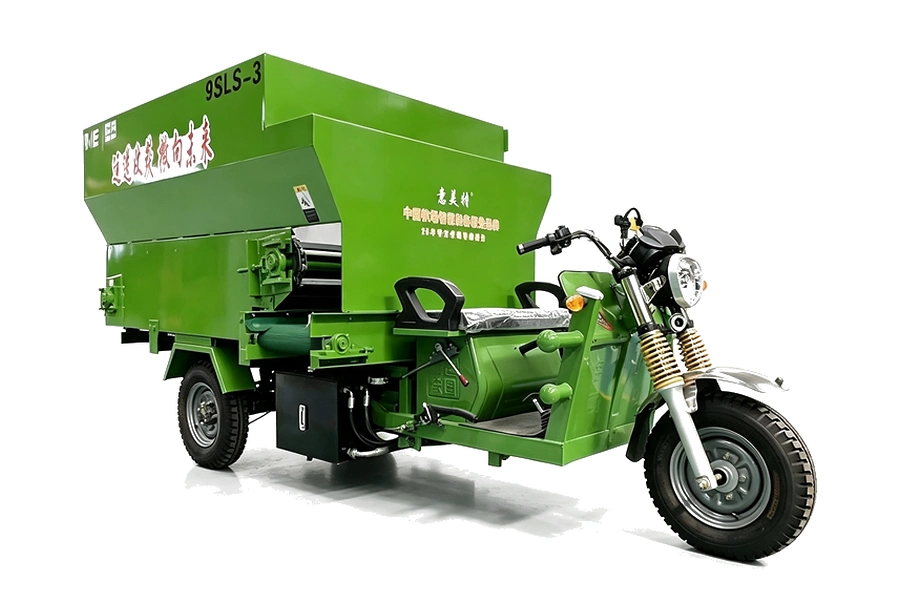
Feed Spreader For Sheep Farms: Make delivery handover a configuration check
Prepare a feed spreader for sheep farms handover list from the purchase agreement before the shipment arrives. Record model, serial number, supplied attachments, consumables, manuals, drawings and agreed options. Inspect visible condition and packing damage before starting feed spreader for sheep farms. Photograph discrepancies and preserve the packing references so that the supplier and carrier can identify the affected item.
For feed spreader for sheep farms, check the delivered configuration against the mixer outlet, loading point and receiving feed rail and discharge height, delivery side and the width of the feeding passage. Verify the utility requirements and the approved startup sequence. Confirm the documentation belongs to the supplied machine rather than a broad product family. Do not resolve a missing guard, incompatible connection or unclear operating limit by improvising a workaround during the first demonstration.
Complete the agreed trial, training and service-contact handover before routine operation. Record open items and identify whether they prevent use or can be corrected later under a documented arrangement. Keep warranty start terms, inspection requirements and spare-part identifiers in an accessible equipment record. The handover ends when the farm can operate and support the agreed configuration with the necessary information.
Feed Spreader For Sheep Farms: Fit the job into the farm’s available windows
Schedule feed spreader for sheep farms from the deadlines of the receiving task. Identify when material becomes available, when the route is open and when the result is needed. Add the full sequence of loading prepared feed, transporting it and metering it along the bunk. Keep loading, return travel, cleanup and charging or refueling visible. A calendar that includes only productive machine time can overbook feed spreader for sheep farms.
For feed spreader for sheep farms, distinguish planned rounds from completed rounds and record the reason for any missed work. Compare delivered mass per pen, discharge continuity and residual material across busy and quiet periods. Check conflicts at the mixer outlet, loading point and receiving feed rail, especially when one loading device or passage serves several jobs. Give the operator a clear priority rule when an interruption means every scheduled task cannot finish on time.
Reserve maintenance and a practical recovery window rather than running the plan at its theoretical limit. Assign a fallback method for essential work. Revise the schedule when herd groups, route length or material conditions change. The useful output is a routine the farm can sustain through ordinary interruptions, with visible exceptions when it cannot.
Feed Spreader For Sheep Farms: Compare configurations against the same task
Compare feed spreader for sheep farms configurations using one defined work round and the same mixed forage or granular feed in the form intended for the selected spreader. Begin with discharge height, delivery side and the width of the feeding passage, then assess the mixer outlet, loading point and receiving feed rail, staffing, measurement, maintenance and service access. A configuration that excels at maximum output may be inconvenient for a small routine task. State the task before deciding which option has the stronger fit.
Ask for demonstrations under comparable conditions. For each feed spreader for sheep farms option, record delivered mass per pen, discharge continuity and residual material, full cycle time and interventions. Note which result comes from a measured trial and which remains a supplier statement. Separate features included in the base price from options. Do not compare a fully configured demonstration unit with a lower-priced quotation that omits the relevant feature.
Use a short decision table with evidence and unresolved questions. Avoid a numerical score that disguises a missing mandatory capability. If an option cannot pass a required access, material or safety condition, resolve that item before comparing preferences. The purchase decision should remain understandable to the operator and service team who will use feed spreader for sheep farms.
Feed Spreader For Sheep Farms: Keep material streams and contact surfaces separated
Define the feed spreader for sheep farms cleaning objective before choosing a method. Remove material that affects operation, protect clean-feed or bedding streams and prevent residue from one job entering an incompatible next job. Identify the contact surfaces and collection points around the mixer outlet, loading point and receiving feed rail. Record whether feed spreader for sheep farms is dedicated to one task or shared across different materials.
For feed spreader for sheep farms, follow the manufacturer’s cleaning and isolation instructions. Confirm what may be washed, how electrical and bearing areas are protected and where washwater goes. Dry scraping, brushing or washing may be appropriate in different places. More water or pressure is not automatically better. Inspect conveyor belts, augers, gate edges, chain tensioners and hydraulic hoses after cleaning for residue, damage and trapped moisture.
Check the result before restart and before changing to another material stream. Use a simple sign-off that identifies the task, method, operator and any defect found. A visually clean machine does not establish a microbiological result, so do not make hygiene claims beyond the farm’s verification method. Frequent difficult cleaning may indicate that access or the chosen configuration needs improvement.
Feed Spreader For Sheep Farms: Measure outcomes that operators can act on
Choose a small number of feed spreader for sheep farms measures tied to the task: delivered mass per pen, discharge continuity and residual material. Define how each measure is collected, who reviews it and what change requires action. Use the same boundary for complete cycle time every day. A dashboard full of travel or running-time figures is less useful if it cannot identify unequal delivery along the bunk or the wrong quantity left in a pen.
For feed spreader for sheep farms, compare operating records with physical observations. Confirm that a completed status corresponds to the required material transfer or floor result. Review missing or implausible readings rather than replacing them with zero. Record changes in mixed forage or granular feed in the form intended for the selected spreader, route or settings so an apparent performance decline can be interpreted in context.
Create a simple response rule for recurring exceptions: inspect, adjust through the approved procedure, request service or use the fallback method. Keep the number of measures manageable enough for ordinary shifts. Review trends over comparable work rounds rather than reacting to a single difficult event. Monitoring is useful when it changes a maintenance or operating decision.
A sheep farm with smaller batches and tighter access
Evaluate the smallest routine group as well as peak demand. Equipment sized only for a large cattle batch may not handle a small sheep ration effectively, and a large vehicle may struggle at low rails or narrow entrances. Measure the actual discharge and pickup geometry. The farm’s nutritionist should set species-appropriate feed and mineral requirements. Keep tools and material streams identifiable when cattle and sheep share facilities. Include time for cleaning and any required separation between groups in the trial, instead of assuming that a small payload automatically means a short job.
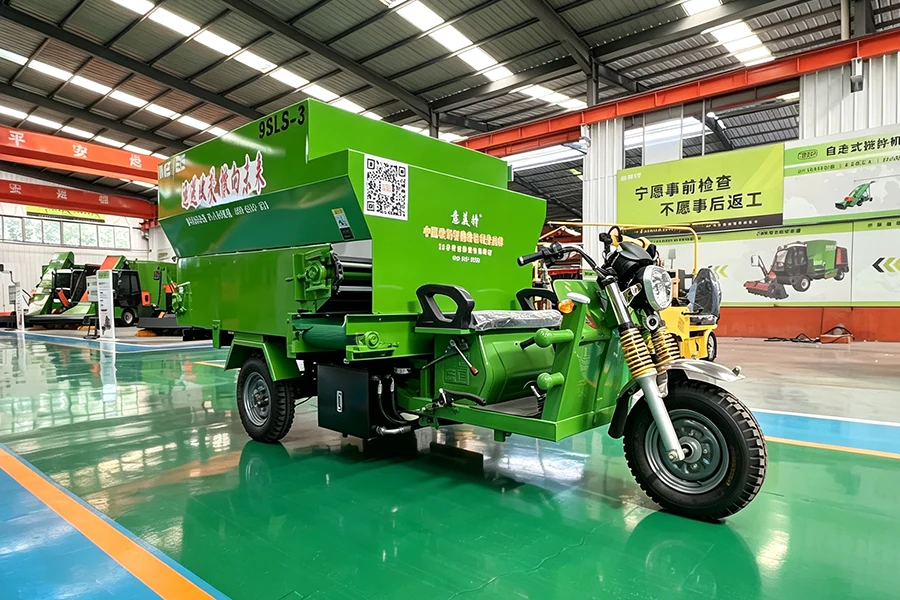
A Worked Planning Example for Feed Spreader For Sheep Farms
Suppose a pen needs an illustrative 1,200 kg delivery over 120 m of bunk. The average target is 10 kg per metre. With a steady 6 m/min travel speed, the required average discharge is 60 kg/min. This arithmetic defines a trial condition, not a rated operating speed. Verify it using actual feed because wet forage and pellets respond differently to gate openings. Separately check acceleration, stopping and feed already left at the bunk.
Configuration Checks and Supporting Evidence
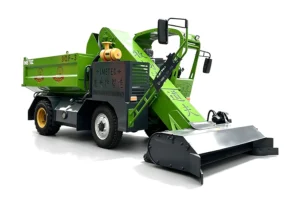
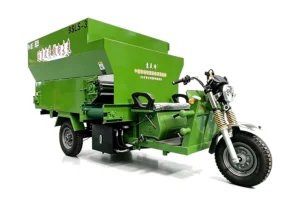
LTSZ lists the Electric Feed Spreader within its livestock equipment portfolio. The product page records Model: 9DSL-3; Transmission Mode: Hydraulic Transmission; Discharging Method: Belt Conveying. Treat these entries as a starting point for a configuration discussion and request the current model sheet before placing an order. Confirm that the proposed feed spreader for sheep farms arrangement fits the mixer outlet, loading point and receiving feed rail.
For this application, ask the team to weigh the loaded and remaining feed and divide a marked feeding run into equal lengths to compare delivery along the route. Provide a layout drawing, the intended mixed forage or granular feed in the form intended for the selected spreader and the required work window. The quotation should identify included options, service access and the evidence needed for handover. You can also review the LTSZ equipment portfolio to understand adjacent feeding and cleaning stages.
Compare the Options Before Committing
| Decision | What to compare | Evidence to request |
|---|---|---|
| Task fit | loading prepared feed, transporting it and metering it along the bunk | A demonstrated complete work round |
| Material fit | mixed forage or granular feed in the form intended for the selected spreader | Trial conditions and actual observations |
| Site fit | discharge height, delivery side and the width of the feeding passage | Configuration drawing and route survey |
| Performance | delivered mass per pen, discharge continuity and residual material | A reproducible acceptance record |
| Serviceability | conveyor belts, augers, gate edges, chain tensioners and hydraulic hoses | Manual, part numbers and access procedure |
- Confirm the correct discharge side at every pen.
- Measure actual loaded mass and retained residuals.
- Evaluate starts, stops and changes of travel speed.
- Test the densest and most fibrous intended feed separately.
For independent background, read Penn State Extension guidance on feed bunk management. Use this guidance for the management context of feed access. Vehicle capacity and discharge claims still need a configuration-specific demonstration.
Discuss Your Farm Requirement
To discuss feed spreader for sheep farms, send your farm layout, daily workload, material details and delivery destination to LTSZ. Ask for a proposed configuration with the operating limits, quotation scope and acceptance checks set out in writing. Include the main constraint identified in this guide so the discussion starts with the job your farm needs to complete.
Frequently Asked Questions
What information is needed to specify feed spreader for sheep farms?
To specify feed spreader for sheep farms, start with loading prepared feed, transporting it and metering it along the bunk, the daily workload and the available work window. Add drawings of the mixer outlet, loading point and receiving feed rail, material details and the result the farm needs to verify.
How should feed spreader for sheep farms performance be checked?
Evaluate feed spreader for sheep farms using delivered mass per pen, discharge continuity and residual material as the operating evidence. A practical approach is to weigh the loaded and remaining feed and divide a marked feeding run into equal lengths to compare delivery along the route. Record settings and conditions so the result can be compared with routine work.
Can feed spreader for sheep farms be selected from capacity alone?
Capacity must be checked alongside discharge height, delivery side and the width of the feeding passage. Confirm material behavior, access, complete cycle time and support requirements. A nominal figure cannot establish every part of the task.
Which feed spreader for sheep farms maintenance points need attention?
Inspect conveyor belts, augers, gate edges, chain tensioners and hydraulic hoses according to the exact model manual. Assign responsibility, use the required isolation procedure and record recurring wear or adjustment needs.
What should a feed spreader for sheep farms quotation include?
Request the model and configuration, drawings, current specifications, included options, delivery scope, training, spare parts and service terms. Agree the acceptance method before ordering.