Índice
Leftover Feed Collection Machine: Define the Farm Requirement
Leftover feed collection machine should be evaluated against a defined job: lifting residual feed from the bunk and transferring it to an approved receiving stream. Start with bunk-edge shape, pickup clearance and the farm’s refusal policy and the material handled on an ordinary working day. Use the checks below to establish the operating limits and the evidence needed before choosing a configuration.
Refusal collection closes the feeding-management loop. The farm needs to know how much was offered, what remained and whether the remaining material is representative or visibly sorted. Brushes and augers must suit the bunk edge without dragging contaminants into fresh feed. Establish separate receiving points for material that may be assessed for a permitted use and material that must be discarded. Equipment cleaning should support that separation rather than rely on an assumed clean appearance.
Leftover Feed Collection Machine: Qualify a supplier against the required configuration
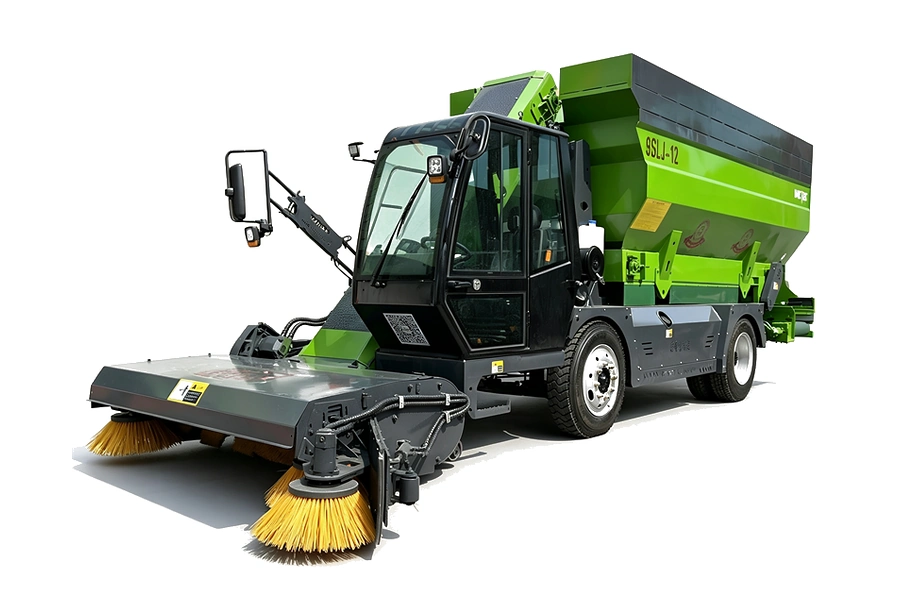
When sourcing leftover feed collection machine, ask the supplier to explain the proposed configuration against lifting residual feed from the bunk and transferring it to an approved receiving stream. Request the exact model, permitted material range, drawings of the pickup brush, auger, conveyor and refusal receiving area and the supporting manuals. Identify whether the company manufactures, integrates or supplies the equipment and which party is responsible for the final specification and service.
Evaluate leftover feed collection machine evidence in a traceable way. A photograph can show a visible arrangement, while a test record should identify material, settings and results. Ask for a demonstration that collects collected refusal mass, remaining residue and clean-to-dirty separation. Verify model-specific documentation and avoid carrying broad claims about experience or certification into the ordered machine without checking the scope.
Confirme exclusões de cotação, responsabilidades de entrega, termos de garantia, treinamento e suporte de peças Mantenha esclarecimentos por escrito com o pedido Um fornecedor que possa explicar os limites de uma configuração e as evidências necessárias para a seleção dá à fazenda uma base mais clara para uma decisão do que aquele que promete um ajuste universal Use o requisito de aceitação para fechar as perguntas restantes.
Leftover Feed Collection Machine: Separate volume, mass and useful payload
For leftover feed collection machine, identify whether the requirement is expressed as material volume, material mass, machine operating weight or total loaded weight. Those quantities answer different questions. Measure bulk density only when it is relevant and record how the sample was taken. A hopper filled to the same visible level can contain different masses of feed refusals, fibrous residue and incidental debris from the feeding alley on different days.
Check leftover feed collection machine weighing or measurement equipment against an appropriate reference using the manufacturer’s procedure. Inspect mounting, zero condition and accumulated residue. Compare measured input and output where the process allows it. A display with many decimal places is not evidence of accuracy. Record the test range and identify whether the check covers the small quantities that matter to the farm.
Keep the measurement method beside collected refusal mass, remaining residue and clean-to-dirty separation in the operating log. Recheck after a relevant repair, relocation or configuration change. Do not turn a measured material mass into permission to exceed machine, axle, floor or towing limits. Use the correct approved limit for each part of the system and ask for clarification when a quotation lists only gross volume.
Leftover Feed Collection Machine: Protect the machine during idle periods and restart
Create the leftover feed collection machine storage plan from the model-specific manual. Remove retained material, inspect brush bristles, auger edges, conveyor belts, seals and tires and choose a location that protects leftover feed collection machine while preserving safe access. Record unresolved defects before the machine is parked. A clean exterior does not show whether moisture or residue remains inside the material path.
For leftover feed collection machine, confirm battery care, fuel or hydraulic precautions, tire support and protection of electrical components as applicable to the configuration. Keep guards and identifying labels in place. Store loose attachments and parts securely and label them for the correct machine. Do not use generic storage advice to override a manufacturer’s requirement for a particular drive system.
Before restart, inspect condition, utilities and controls, then follow the prescribed return-to-service sequence. Check the pickup brush, auger, conveyor and refusal receiving area for changes made while the equipment was idle. Run a representative task and compare collected refusal mass, remaining residue and clean-to-dirty separation with the previous record. Resolve deterioration or changed conditions before returning leftover feed collection machine to its normal workload.
Leftover Feed Collection Machine: Check the existing farm before choosing a retrofit
For a leftover feed collection machine retrofit, document the current equipment, utilities and structures before requesting a replacement. Keep the existing bottleneck separate from problems that only appear during unusual events. Measure the pickup brush, auger, conveyor and refusal receiving area and collect a recent record of collected refusal mass, remaining residue and clean-to-dirty separation. Those observations establish whether the replacement needs more capacity, better access, different controls or a more dependable service arrangement.
List every physical change required for leftover feed collection machine: access widening, loading-point adjustment, electrical work, floor repair or a revised receiving area. Ask who designs and approves each change. Existing structures may limit the available options even when a larger machine appears attractive. Avoid using a supplier’s standard drawing as proof that an old farm floor or electrical supply can support the installation.
Planeje a mudança em torno do trabalho diário essencial Decida quando o sistema antigo for retirado, como o novo sistema será testado e qual fallback permanece disponível Mantenha as instruções temporárias separadas do procedimento operacional final Após um curto período de uso rotineiro, compare o novo processo com a linha de base original e feche quaisquer problemas de interface não resolvidos.
Leftover Feed Collection Machine: Make delivery handover a configuration check
Prepare a leftover feed collection machine handover list from the purchase agreement before the shipment arrives. Record model, serial number, supplied attachments, consumables, manuals, drawings and agreed options. Inspect visible condition and packing damage before starting leftover feed collection machine. Photograph discrepancies and preserve the packing references so that the supplier and carrier can identify the affected item.
For leftover feed collection machine, check the delivered configuration against the pickup brush, auger, conveyor and refusal receiving area and bunk-edge shape, pickup clearance and the farm’s refusal policy. Verify the utility requirements and the approved startup sequence. Confirm the documentation belongs to the supplied machine rather than a broad product family. Do not resolve a missing guard, incompatible connection or unclear operating limit by improvising a workaround during the first demonstration.
Conclua o teste acordado, treinamento e entrega de contato de serviço antes da operação de rotina Registre itens abertos e identifique se eles impedem o uso ou podem ser corrigidos posteriormente sob um arranjo documentado Mantenha os termos de início da garantia, requisitos de inspeção e identificadores de peças de reposição em um registro de equipamento acessível A entrega termina quando a fazenda pode operar e suportar a configuração acordada com as informações necessárias.
A shared fleet serving more than one farm or unit
Build a separate operating requirement for each site. Gates, power connections, receiving points and material conditions can differ even when the equipment category is the same. Include travel, cleaning, site induction and the return trip in utilization figures. Record which settings belong to which site, and prevent an operator from carrying an unsuitable setup to the next job. Service planning needs a named contact at each location and a clear procedure for delays. A machine’s availability to the fleet is different from its availability at the moment a particular farm needs it.
A Worked Planning Example for Leftover Feed Collection Machine
For illustration, a group offered 5,000 kg as fed and leaving 150 kg has a 3% as-fed refusal fraction. Moisture changes and spilled material complicate the interpretation, so the number is a management observation rather than a direct measure of nutrient intake. A collector helps make the removal routine repeatable. It does not decide whether refusals may be reused. That decision belongs to the farm’s nutrition, quality and animal-health procedures.
Verificações de configuração e evidências de suporte
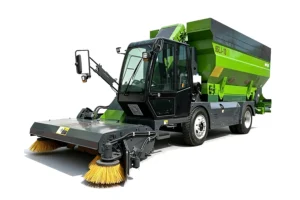
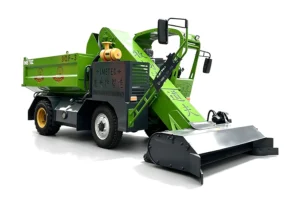
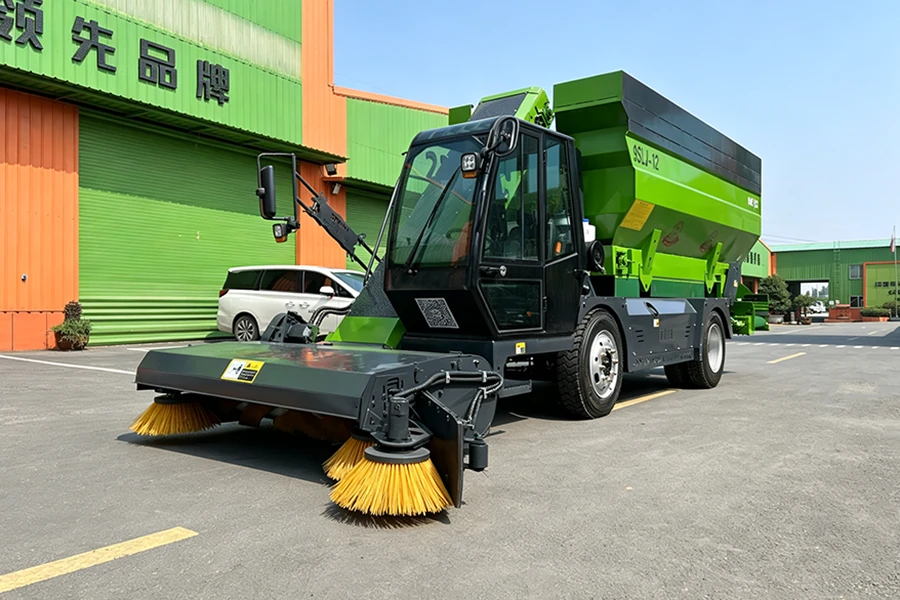
LTSZ lista o Coletor de feeds sobras within its livestock equipment portfolio. The product page records Model: 9DSC-12; Collecting System: Roller Brush + Auger Material Collection; Tire Quantity: 2 front, 4 rear. Treat these entries as a starting point for a configuration discussion and request the current model sheet before placing an order. Confirm that the proposed leftover feed collection machine arrangement fits the pickup brush, auger, conveyor and refusal receiving area.
For this application, ask the team to weigh collected refusals and inspect the bunk surface after the pass while tracing where each collected batch is unloaded. Provide a layout drawing, the intended feed refusals, fibrous residue and incidental debris from the feeding alley and the required work window. The quotation should identify included options, service access and the evidence needed for handover. You can also review the Portfólio de equipamentos LTSZ para entender os estágios adjacentes de alimentação e limpeza.
Compare as opções antes de se comprometer
| Decisão | O que comparar | Provas a solicitar |
|---|---|---|
| Ajuste de tarefa | lifting residual feed from the bunk and transferring it to an approved receiving stream | Uma rodada de trabalho completa demonstrada |
| Ajuste material | feed refusals, fibrous residue and incidental debris from the feeding alley | Condições de ensaio e observações reais |
| Site fit | bunk-edge shape, pickup clearance and the farm’s refusal policy | Desenho de configuração e levantamento de rotas |
| Desempenho | collected refusal mass, remaining residue and clean-to-dirty separation | Um registo de aceitação reprodutível |
| Servibilidade | brush bristles, auger edges, conveyor belts, seals and tires | Manual, números de peça e procedimento de acesso |
- Identify the receiving destination before starting collection.
- Record refusal mass against the relevant animal group.
- Inspect edge pickup and remaining damp residue.
- Clean contact surfaces before returning to a clean-feed task.
Para obter informações independentes, leia Orientação da Penn State Extension sobre gerenciamento de beliches de ração. The resource supports attention to feed access and daily management. Refusal disposition and reuse require the farm’s own nutrition and hygiene decisions.
Discuta suas necessidades agrícolas
To discuss leftover feed collection machine, send your farm layout, daily workload, material details and delivery destination to LTSZ. Peça uma configuração proposta com os limites operacionais, escopo de cotação e verificações de aceitação estabelecidos por escrito Inclua a principal restrição identificada neste guia para que a discussão comece com o trabalho que sua fazenda precisa concluir.
Perguntas frequentes
What information is needed to specify leftover feed collection machine?
To specify leftover feed collection machine, start with lifting residual feed from the bunk and transferring it to an approved receiving stream, the daily workload and the available work window. Add drawings of the pickup brush, auger, conveyor and refusal receiving area, material details and the result the farm needs to verify.
How should leftover feed collection machine performance be checked?
Evaluate leftover feed collection machine using collected refusal mass, remaining residue and clean-to-dirty separation as the operating evidence. A practical approach is to weigh collected refusals and inspect the bunk surface after the pass while tracing where each collected batch is unloaded. Record settings and conditions so the result can be compared with routine work.
Can leftover feed collection machine be selected from capacity alone?
Capacity must be checked alongside bunk-edge shape, pickup clearance and the farm’s refusal policy. Confirm material behavior, access, complete cycle time and support requirements. A nominal figure cannot establish every part of the task.
Which leftover feed collection machine maintenance points need attention?
Inspect brush bristles, auger edges, conveyor belts, seals and tires according to the exact model manual. Assign responsibility, use the required isolation procedure and record recurring wear or adjustment needs.
What should a leftover feed collection machine quotation include?
Solicite o modelo e configuração, desenhos, especificações atuais, opções incluídas, escopo de entrega, treinamento, peças de reposição e termos de serviço Concorde com o método de aceitação antes de fazer o pedido.