Spis treści
Leftover Feed Collection Machine: Define the Farm Requirement
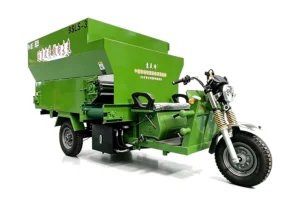
Leftover feed collection machine should be evaluated against a defined job: lifting residual feed from the bunk and transferring it to an approved receiving stream. Start with bunk-edge shape, pickup clearance and the farm’s refusal policy and the material handled on an ordinary working day. Use the checks below to establish the operating limits and the evidence needed before choosing a configuration.
Refusal collection closes the feeding-management loop. The farm needs to know how much was offered, what remained and whether the remaining material is representative or visibly sorted. Brushes and augers must suit the bunk edge without dragging contaminants into fresh feed. Establish separate receiving points for material that may be assessed for a permitted use and material that must be discarded. Equipment cleaning should support that separation rather than rely on an assumed clean appearance.
Leftover Feed Collection Machine: Qualify a supplier against the required configuration
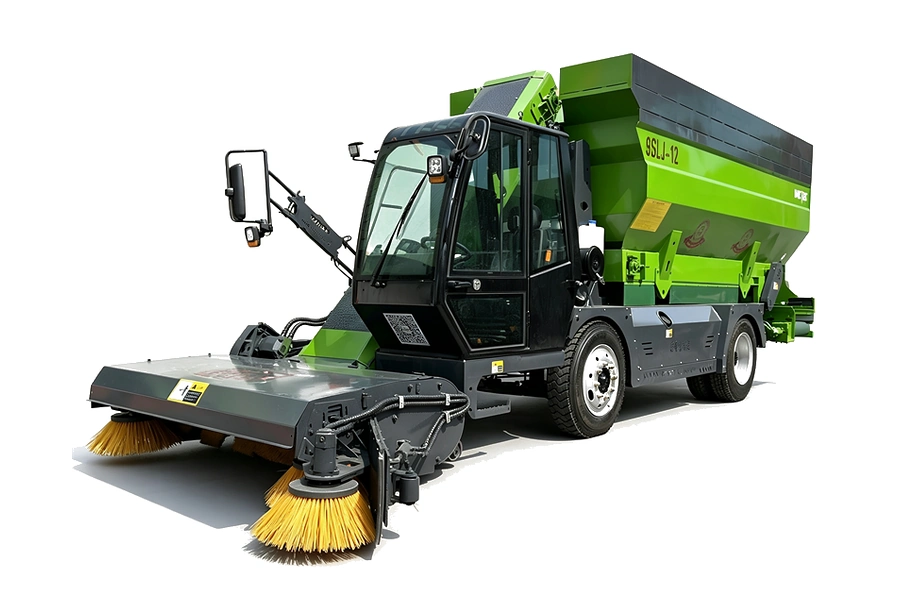
When sourcing leftover feed collection machine, ask the supplier to explain the proposed configuration against lifting residual feed from the bunk and transferring it to an approved receiving stream. Request the exact model, permitted material range, drawings of the pickup brush, auger, conveyor and refusal receiving area and the supporting manuals. Identify whether the company manufactures, integrates or supplies the equipment and which party is responsible for the final specification and service.
Evaluate leftover feed collection machine evidence in a traceable way. A photograph can show a visible arrangement, while a test record should identify material, settings and results. Ask for a demonstration that collects collected refusal mass, remaining residue and clean-to-dirty separation. Verify model-specific documentation and avoid carrying broad claims about experience or certification into the ordered machine without checking the scope.
Confirm quotation exclusions, delivery responsibilities, warranty terms, training and parts support. Keep written clarifications with the order. A supplier who can explain the limits of a configuration and the evidence needed for selection gives the farm a clearer basis for a decision than one who promises a universal fit. Use the acceptance requirement to close remaining questions.
Leftover Feed Collection Machine: Separate volume, mass and useful payload
For leftover feed collection machine, identify whether the requirement is expressed as material volume, material mass, machine operating weight or total loaded weight. Those quantities answer different questions. Measure bulk density only when it is relevant and record how the sample was taken. A hopper filled to the same visible level can contain different masses of feed refusals, fibrous residue and incidental debris from the feeding alley on different days.
Check leftover feed collection machine weighing or measurement equipment against an appropriate reference using the manufacturer’s procedure. Inspect mounting, zero condition and accumulated residue. Compare measured input and output where the process allows it. A display with many decimal places is not evidence of accuracy. Record the test range and identify whether the check covers the small quantities that matter to the farm.
Keep the measurement method beside collected refusal mass, remaining residue and clean-to-dirty separation in the operating log. Recheck after a relevant repair, relocation or configuration change. Do not turn a measured material mass into permission to exceed machine, axle, floor or towing limits. Use the correct approved limit for each part of the system and ask for clarification when a quotation lists only gross volume.
Leftover Feed Collection Machine: Protect the machine during idle periods and restart
Create the leftover feed collection machine storage plan from the model-specific manual. Remove retained material, inspect brush bristles, auger edges, conveyor belts, seals and tires and choose a location that protects leftover feed collection machine while preserving safe access. Record unresolved defects before the machine is parked. A clean exterior does not show whether moisture or residue remains inside the material path.
For leftover feed collection machine, confirm battery care, fuel or hydraulic precautions, tire support and protection of electrical components as applicable to the configuration. Keep guards and identifying labels in place. Store loose attachments and parts securely and label them for the correct machine. Do not use generic storage advice to override a manufacturer’s requirement for a particular drive system.
Before restart, inspect condition, utilities and controls, then follow the prescribed return-to-service sequence. Check the pickup brush, auger, conveyor and refusal receiving area for changes made while the equipment was idle. Run a representative task and compare collected refusal mass, remaining residue and clean-to-dirty separation with the previous record. Resolve deterioration or changed conditions before returning leftover feed collection machine to its normal workload.
Leftover Feed Collection Machine: Check the existing farm before choosing a retrofit
For a leftover feed collection machine retrofit, document the current equipment, utilities and structures before requesting a replacement. Keep the existing bottleneck separate from problems that only appear during unusual events. Measure the pickup brush, auger, conveyor and refusal receiving area and collect a recent record of collected refusal mass, remaining residue and clean-to-dirty separation. Those observations establish whether the replacement needs more capacity, better access, different controls or a more dependable service arrangement.
List every physical change required for leftover feed collection machine: access widening, loading-point adjustment, electrical work, floor repair or a revised receiving area. Ask who designs and approves each change. Existing structures may limit the available options even when a larger machine appears attractive. Avoid using a supplier’s standard drawing as proof that an old farm floor or electrical supply can support the installation.
Zaplanuj przejście wokół niezbędnej codziennej pracy Zdecyduj, kiedy stary system zostanie wycofany, jak nowy system zostanie przetestowany i który błąd pozostanie dostępny Zachowaj tymczasowe instrukcje oddzielnie od ostatecznej procedury operacyjnej Po krótkim okresie rutynowego użytkowania porównaj nowy proces z pierwotną linią bazową i zamknij wszelkie nierozwiązane problemy z interfejsem.
Leftover Feed Collection Machine: Make delivery handover a configuration check
Prepare a leftover feed collection machine handover list from the purchase agreement before the shipment arrives. Record model, serial number, supplied attachments, consumables, manuals, drawings and agreed options. Inspect visible condition and packing damage before starting leftover feed collection machine. Photograph discrepancies and preserve the packing references so that the supplier and carrier can identify the affected item.
For leftover feed collection machine, check the delivered configuration against the pickup brush, auger, conveyor and refusal receiving area and bunk-edge shape, pickup clearance and the farm’s refusal policy. Verify the utility requirements and the approved startup sequence. Confirm the documentation belongs to the supplied machine rather than a broad product family. Do not resolve a missing guard, incompatible connection or unclear operating limit by improvising a workaround during the first demonstration.
Zakończ uzgodniony okres próbny, szkolenie i przekazanie kontaktu z serwisem przed rutynową operacją Zapisz otwarte elementy i określ, czy uniemożliwiają one użycie lub mogą zostać później poprawione w ramach udokumentowanego porozumienia Zachowaj warunki rozpoczęcia gwarancji, wymagania dotyczące kontroli i identyfikatory części zamiennych w dostępnym zapisie sprzętu Przekazanie kończy się, gdy gospodarstwo może obsługiwać i wspierać uzgodnioną konfigurację z niezbędnymi informacjami.
Wspólna flota obsługująca więcej niż jedno gospodarstwo lub jednostkę
Zbuduj osobne wymagania operacyjne dla każdej witryny Bramy, przyłącza zasilania, punkty odbioru i warunki materiałowe mogą się różnić nawet wtedy, gdy kategoria sprzętu jest taka sama Uwzględnij w danych liczbowych dotyczących użytkowania podróż, sprzątanie, indukcję miejsca i podróż powrotną Zapisz, które ustawienia należą do której witryny, i uniemożliw operatorowi przeniesienie nieodpowiedniego ustawienia do następnej pracy Planowanie usług wymaga wymienionego kontaktu w każdej lokalizacji i jasnej procedury opóźnień Dostępność maszyny dla floty różni się od jej dostępności w momencie, gdy dana farma jej potrzebuje.
A Worked Planning Example for Leftover Feed Collection Machine
For illustration, a group offered 5,000 kg as fed and leaving 150 kg has a 3% as-fed refusal fraction. Moisture changes and spilled material complicate the interpretation, so the number is a management observation rather than a direct measure of nutrient intake. A collector helps make the removal routine repeatable. It does not decide whether refusals may be reused. That decision belongs to the farm’s nutrition, quality and animal-health procedures.
Kontrole konfiguracji i dowody potwierdzające
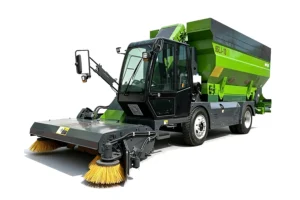
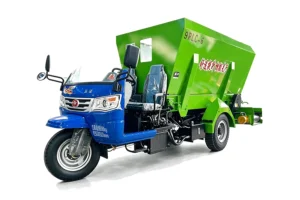
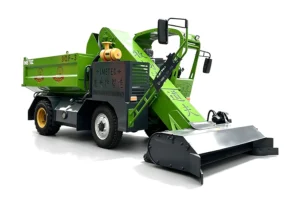
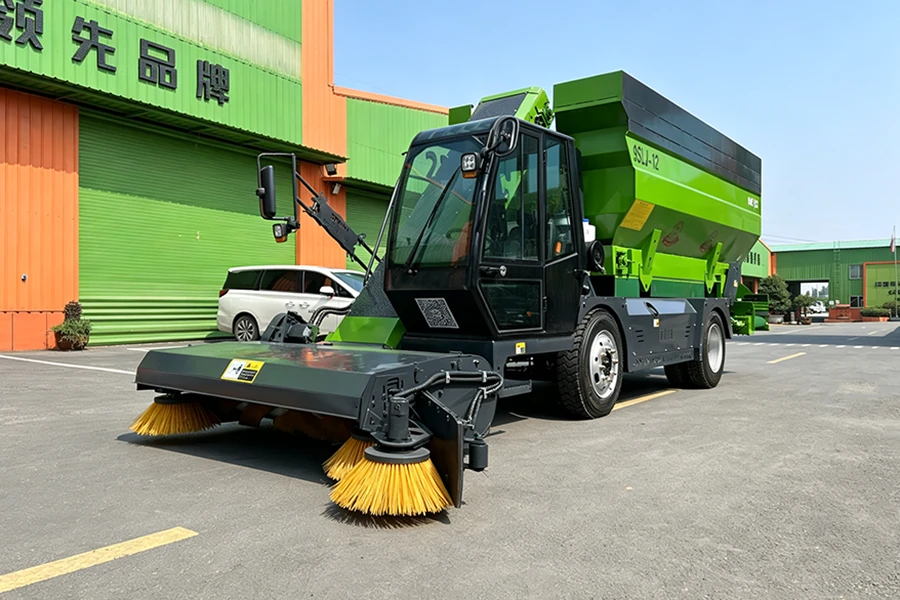
LTSZ wymienia Resztki Feed Collector within its livestock equipment portfolio. The product page records Model: 9DSC-12; Collecting System: Roller Brush + Auger Material Collection; Tire Quantity: 2 front, 4 rear. Treat these entries as a starting point for a configuration discussion and request the current model sheet before placing an order. Confirm that the proposed leftover feed collection machine arrangement fits the pickup brush, auger, conveyor and refusal receiving area.
For this application, ask the team to weigh collected refusals and inspect the bunk surface after the pass while tracing where each collected batch is unloaded. Provide a layout drawing, the intended feed refusals, fibrous residue and incidental debris from the feeding alley and the required work window. The quotation should identify included options, service access and the evidence needed for handover. You can also review the Portfolio sprzętu LTSZ aby zrozumieć sąsiednie etapy karmienia i czyszczenia.
Porównaj opcje przed podjęciem
| Decyzja | Co porównać | Dowód na żądanie |
|---|---|---|
| Dopasowanie zadania | lifting residual feed from the bunk and transferring it to an approved receiving stream | Zademonstrowana kompletna runda robocza |
| Dopasowanie materiału | feed refusals, fibrous residue and incidental debris from the feeding alley | Warunki próbne i rzeczywiste obserwacje |
| Dopasowanie witryny | bunk-edge shape, pickup clearance and the farm’s refusal policy | Rysunek konfiguracji i przegląd trasy |
| Wydajność | collected refusal mass, remaining residue and clean-to-dirty separation | Odtwarzalny rekord akceptacji |
| Użyteczność | brush bristles, auger edges, conveyor belts, seals and tires | Ręczne, numery części i procedura dostępu |
- Identify the receiving destination before starting collection.
- Record refusal mass against the relevant animal group.
- Inspect edge pickup and remaining damp residue.
- Clean contact surfaces before returning to a clean-feed task.
Aby uzyskać niezależne tło, przeczytaj Wytyczne dotyczące rozszerzenia Penn State dotyczące zarządzania paszami. The resource supports attention to feed access and daily management. Refusal disposition and reuse require the farm’s own nutrition and hygiene decisions.
Omów wymagania dotyczące gospodarstwa
To discuss leftover feed collection machine, send your farm layout, daily workload, material details and delivery destination to LTSZ. Poproś o proponowaną konfigurację z limitami operacyjnymi, zakresem wyceny i kontrolami akceptacji określonymi na piśmie Dołącz główne ograniczenie określone w tym przewodniku, aby dyskusja rozpoczęła się od zadania, które musi wykonać Twoje gospodarstwo.
Często Zadawane Pytania
What information is needed to specify leftover feed collection machine?
To specify leftover feed collection machine, start with lifting residual feed from the bunk and transferring it to an approved receiving stream, the daily workload and the available work window. Add drawings of the pickup brush, auger, conveyor and refusal receiving area, material details and the result the farm needs to verify.
How should leftover feed collection machine performance be checked?
Evaluate leftover feed collection machine using collected refusal mass, remaining residue and clean-to-dirty separation as the operating evidence. A practical approach is to weigh collected refusals and inspect the bunk surface after the pass while tracing where each collected batch is unloaded. Record settings and conditions so the result can be compared with routine work.
Can leftover feed collection machine be selected from capacity alone?
Capacity must be checked alongside bunk-edge shape, pickup clearance and the farm’s refusal policy. Confirm material behavior, access, complete cycle time and support requirements. A nominal figure cannot establish every part of the task.
Which leftover feed collection machine maintenance points need attention?
Inspect brush bristles, auger edges, conveyor belts, seals and tires according to the exact model manual. Assign responsibility, use the required isolation procedure and record recurring wear or adjustment needs.
What should a leftover feed collection machine quotation include?
Poproś o model i konfigurację, rysunki, aktualne specyfikacje, zawarte opcje, zakres dostawy, szkolenie, części zamienne i warunki serwisowe Uzgodnij sposób akceptacji przed złożeniem zamówienia.