İçindekiler Tablosu
High Capacity Telehandler: Define the Farm Requirement
High capacity telehandler should be evaluated against a defined job: collecting, traveling with and placing a load using an approved attachment. Start with the attachment-specific load chart and the actual ground conditions and the material handled on an ordinary working day. Use the checks below to establish the operating limits and the evidence needed before choosing a configuration.
Telehandler capacity changes across the working envelope. A machine that lifts a load close to its chassis may not be able to place it at the required forward reach. The chart, approved attachment, tire specification, stabilizer condition where fitted and ground conditions all matter. Plan pedestrian separation and travel with the boom in the manufacturer’s approved position. Dimensions and turning clearance also deserve a measured route survey before selecting a machine for an existing farm.
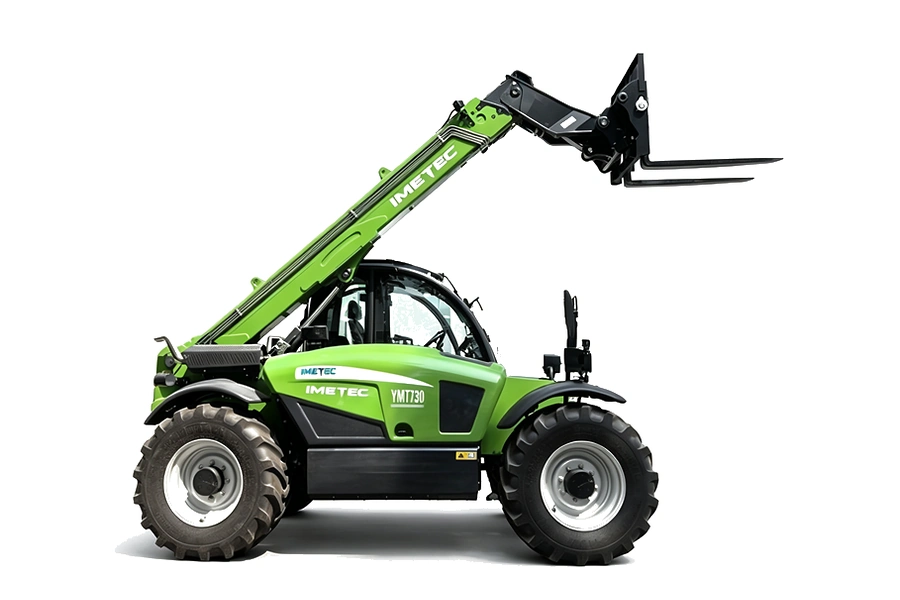
High Capacity Telehandler: Verify load mass and the attachment-specific chart
For high capacity telehandler, distinguish operating weight, payload and the total load carried by the boom. Obtain a reliable load mass, the load centre and the attachment identification. The applicable load chart must cover the required lift height and horizontal reach. Machine weight alone cannot establish a permitted lift.
Compare the high capacity telehandler task with the chart for the exact configuration. Attachment mass, approved tires and any required stabilizer arrangement affect the assessment. Ask a competent operator to explain how the chart applies to the planned pickup and placement. Do not infer an allowable load from maximum height or headline maximum capacity.
Record the load details and approved operating conditions with the job plan. Confirm ground conditions and keep people clear of the lifting operation. When the attachment or task changes, repeat the assessment using the corresponding documentation. A successful lift outside a documented plan is not a substitute for the permitted load information.
High Capacity Telehandler: Connect the machine to the whole work sequence
Map high capacity telehandler as part of collecting, traveling with and placing a load using an approved attachment. List the high capacity telehandler task that supplies material, the task that receives it and the person responsible for the handoff. Record the start and finish of every stage over several representative rounds. This makes waiting visible and prevents a fast isolated machine cycle from being mistaken for a fast complete process.
Focus the high capacity telehandler trial on the attachment coupler, receiving stack and farm travel route. Confirm that loading and receiving heights, sides and positions agree. Note when staff need to move another machine, open a gate or change a setting. Those actions belong in the workflow time. If the new equipment shifts the bottleneck to storage, transport or unloading, evaluate the new limit before increasing the original machine’s capacity.
Write a short normal-work sequence and an exception sequence for missed deliveries, blocked access or unavailable receivers. Give the operator authority to pause when the conditions fall outside the approved procedure. Review load mass, required reach, lift height and repeatable cycle time with the people who do the work. A useful workflow keeps essential tasks repeatable through ordinary staff changes and small interruptions.
High Capacity Telehandler: Design the loading handoff for repeatable work
The high capacity telehandler loading interface should match the source material, loading device and receiving opening. Measure the approach, height, clearance and room for the loading vehicle to turn. Confirm the attachment coupler, receiving stack and farm travel route with a configuration drawing. Include spill collection and the operator’s view of the receiving point in the assessment.
For high capacity telehandler, use pallets, bales or loose materials with verified load characteristics to test the loading sequence. Record the quantity per loading action, the time spent aligning and the difference between intended and actual material transfer. Avoid using a large bucket or high delivery rate merely to shorten the demonstration. Loading must remain within high capacity telehandler’s permitted range and preserve the measurement or material condition needed downstream.
Ayrı operatörlerin veya makinelerin görevi paylaştığı net bir sinyal veya kilitleme düzenlemesi üzerinde anlaşın İnsanları asılı yüklerden, hareketli konveyörlerden ve kesme mekanizmalarından uzak tutun Her denemeden sonra alıcı alanı dökülmeler ve hasar açısından inceleyin Tekrarlanabilir bir yükleme aktarımı, düzeltme işini azaltır ve daha sonraki kapasite hesaplamalarına güvenilir bir başlangıç noktası sağlar.
High Capacity Telehandler: Keep records that answer a maintenance or feeding question
A practical high capacity telehandler record identifies date, operator, machine, task, material condition and settings. Add load mass, required reach, lift height and repeatable cycle time using a consistent measurement method. Keep the form short enough to complete at the work site. Do not collect detailed data without deciding which operating, service or procurement question it will help answer.
For high capacity telehandler, preserve target and actual results separately. Record interventions, incomplete tasks and changed settings instead of overwriting them with the final successful result. Link photographs or fault codes to the same event identifier. This makes it possible to investigate selecting a machine from its headline capacity without checking capacity at reach and prevents a later review from assuming the entire round ran normally.
Review records with operators at a useful interval and assign action to recurring exceptions. Keep original observations intact when adding a diagnosis or correction. Use the data to refine the attachment-specific load chart and the actual ground conditions and the service plan. A simple, consistent log is more valuable than an elaborate spreadsheet with missing definitions and unverified zero entries.
High Capacity Telehandler: Plan expansion without assuming linear output
For high capacity telehandler, model present demand and future demand as separate cases. More animals or more barns can add travel, group changes and waiting as well as material quantity. Review the attachment-specific load chart and the actual ground conditions in both layouts. A proportional increase in nominal capacity may leave the same bottleneck in the attachment coupler, receiving stack and farm travel route. Identify which part of the process must expand first.
Compare one larger high capacity telehandler unit, additional work rounds and multiple units where appropriate. Include the smallest group and the planned service downtime in the comparison. A second unit may provide fallback capacity, while one larger machine may simplify staffing but concentrate interruption risk. Use complete cycle records and load mass, required reach, lift height and repeatable cycle time to evaluate the alternatives.
Aşama alımları teyit edilen talep ve tesislerin almaya hazır olma durumu etrafında fiziksel erişim veya hizmet kapasitesini yalnızca genişleme planı tarafından desteklendiği yerlerde rezerve edin.Her aşamadan sonra, arayüzü ve kabul kontrollerini tekrarlayın.Çiftliğin farklı şekilde gelişebilecek doğrulanmamış bir iş yükü için bugün ödeme yapmaması için gelecekteki varsayımları görünür tutun.
A farm expanding while existing work continues
Use the present layout and the proposed layout as separate operating cases. A future barn can increase total demand while also adding longer routes and additional group changes. Do not simply increase hopper size in proportion to animal numbers. Check whether loading points, storage, charging and unloading facilities can support the expansion. Stage commissioning so essential daily work continues while operators learn the new process. Keep temporary routes clearly identified, then revise the final settings and acceptance record once construction is complete.
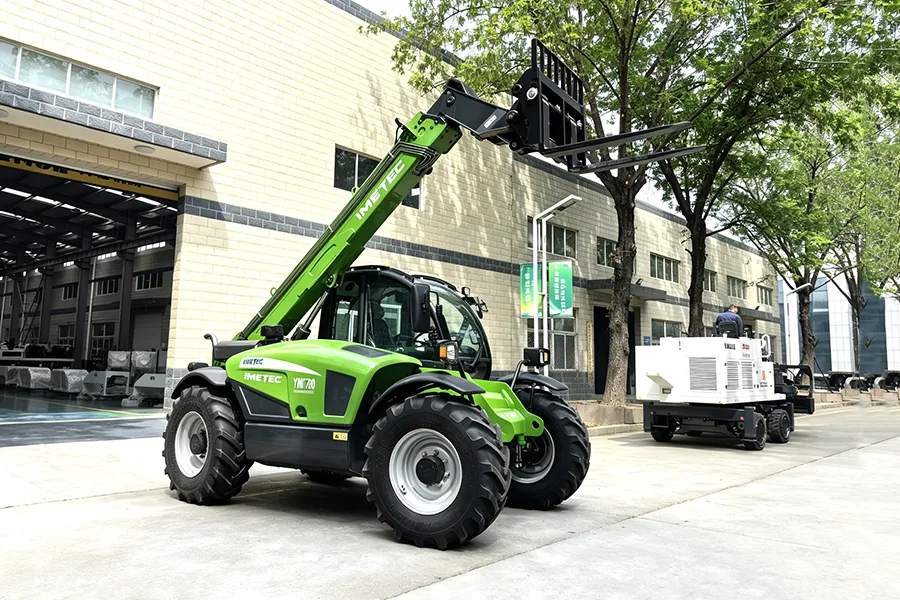
A Worked Planning Example for High Capacity Telehandler
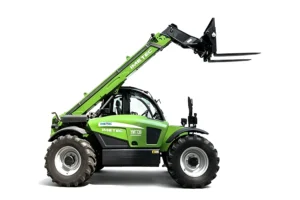
If a task requires placing a verified 1,200 kg load at a stated horizontal reach, the decision must use the chart for that reach, lift height and fitted attachment. A headline maximum lifting capacity cannot answer the question. Attachment mass and the load centre affect the configuration. The LTSZ product page lists a 7 m maximum working height for the MTS-735, but that figure alone establishes no permitted load at 7 m or at any horizontal reach. Request the actual chart.
Yapılandırma Kontrolleri ve Destekleyici Kanıtlar
LTSZ listeler Telehandler within its livestock equipment portfolio. The product page records Model: MTS-735; Vehicle Dimensions: 4936*2300*2550mm; Wheelbase: 2.85m. Treat these entries as a starting point for a configuration discussion and request the current model sheet before placing an order. Confirm that the proposed high capacity telehandler arrangement fits the attachment coupler, receiving stack and farm travel route.
For this application, ask the team to have a competent operator demonstrate the required placement using the correct attachment and the applicable load chart, with people kept clear. Provide a layout drawing, the intended pallets, bales or loose materials with verified load characteristics and the required work window. The quotation should identify included options, service access and the evidence needed for handover. You can also review the LTSZ ekipman portföyü bitişik besleme ve temizleme aşamalarını anlamak için.
Taahhüt Etmeden Önce Seçenekleri Karşılaştırın
| Karar | Neyi karşılaştırmak | Talep edilecek kanıt |
|---|---|---|
| Görev uyumu | collecting, traveling with and placing a load using an approved attachment | Gösterilen tam bir çalışma turu |
| Malzeme uyumu | pallets, bales or loose materials with verified load characteristics | Deneme koşulları ve gerçek gözlemler |
| Site uyumu | the attachment-specific load chart and the actual ground conditions | Yapılandırma çizimi ve rota araştırması |
| Performans | load mass, required reach, lift height and repeatable cycle time | Tekrarlanabilir bir kabul kaydı |
| Hizmet verilebilirlik | boom pads, pins, couplers, hydraulic hoses, tires and lifting attachments | Kılavuz, parça numaraları ve erişim prosedürü |
- Obtain the load chart for the exact machine and attachment.
- Record load mass, load centre, lift height and horizontal reach.
- Check ground conditions and overhead obstructions.
- Use trained, authorized operators and a planned pedestrian exclusion area.
Bağımsız arka plan için okuyun HSE guidance on agricultural telehandlers. HSE discusses training, attachments, visibility and safe operation. Apply the requirements of the destination jurisdiction and the exact machine manual as well.
Çiftlik Gereksiniminizi Tartışın
To discuss high capacity telehandler, send your farm layout, daily workload, material details and delivery destination to LTSZ. Yazılı olarak belirtilen çalışma limitleri, teklif kapsamı ve kabul kontrolleri ile önerilen bir yapılandırma isteyin.Tartışmanın çiftliğinizin tamamlaması gereken işle başlaması için bu kılavuzda tanımlanan ana kısıtlamayı ekleyin.
Sıkça Sorulan Sorular
What information is needed to specify high capacity telehandler?
To specify high capacity telehandler, start with collecting, traveling with and placing a load using an approved attachment, the daily workload and the available work window. Add drawings of the attachment coupler, receiving stack and farm travel route, material details and the result the farm needs to verify.
How should high capacity telehandler performance be checked?
Evaluate high capacity telehandler using load mass, required reach, lift height and repeatable cycle time as the operating evidence. A practical approach is to have a competent operator demonstrate the required placement using the correct attachment and the applicable load chart, with people kept clear. Record settings and conditions so the result can be compared with routine work.
Can high capacity telehandler be selected from capacity alone?
Capacity must be checked alongside the attachment-specific load chart and the actual ground conditions. Confirm material behavior, access, complete cycle time and support requirements. A nominal figure cannot establish every part of the task.
Which high capacity telehandler maintenance points need attention?
Inspect boom pads, pins, couplers, hydraulic hoses, tires and lifting attachments according to the exact model manual. Assign responsibility, use the required isolation procedure and record recurring wear or adjustment needs.
What should a high capacity telehandler quotation include?
Model ve konfigürasyon, çizimler, güncel özellikler, dahil seçenekler, teslimat kapsamı, eğitim, yedek parça ve servis şartlarını talep edin Sipariş vermeden önce kabul yöntemini kabul edin.