Tabla de contenidos
Livestock Equipment: Define the Farm Requirement
Livestock equipment should be evaluated against a defined job: coordinating feed preparation, delivery, feed access and barn-cleaning tasks. Start with the existing farm layout, staffing and interdependent work windows and the material handled on an ordinary working day. Use the checks below to establish the operating limits and the evidence needed before choosing a configuration.
Un plan de equipamiento debe comenzar con la secuencia de trabajo y las limitaciones de la granja. Una máquina más rápida crea valor cuando mejora la parte límite de esa secuencia sin transferir el retraso a otra parte. Las puertas de enlace, las fuentes de alimentación, los almacenes de materiales y las habilidades del personal existentes dan forma a las opciones prácticas. Separe las capacidades esenciales de las características opcionales e identifique qué evidencia establecerá que cada máquina propuesta se ajusta a su tarea prevista.
Livestock Equipment: Survey clearance at the awkward parts of the route
A useful livestock equipment layout survey begins at the narrowest doorway and the most constrained turn, rather than the widest alley. Record clear width, clear height, floor changes, curb positions and places where other vehicles wait. Draw the route through the handoffs between storage, preparation, barn routes and waste reception. Include the space needed while loading or unloading because the operating envelope can be larger than the parked dimensions.
Walk the intended route with the regular operator. Mark animal crossings, pedestrian doors, drainage channels and overhead services. For livestock equipment, the relevant restriction is the existing farm layout, staffing and interdependent work windows. Ask for the exact configuration’s dimensions and a turning-envelope drawing. Use that drawing to assess the route with realistic obstructions in place. A nominal turning radius does not by itself prove that the rear or attachment clears a wall.
Set a trial plan for the difficult locations and decide where an observer can stand safely. Document any proposed gate relocation, floor repair or traffic separation. Assign responsibility for those changes before delivery. Repeat the route assessment after construction or a change in attachment. The route remains an operating condition that needs upkeep, rather than a one-time measurement stored with the quotation.
Livestock Equipment: Plan expansion without assuming linear output
For livestock equipment, model present demand and future demand as separate cases. More animals or more barns can add travel, group changes and waiting as well as material quantity. Review the existing farm layout, staffing and interdependent work windows in both layouts. A proportional increase in nominal capacity may leave the same bottleneck in the handoffs between storage, preparation, barn routes and waste reception. Identify which part of the process must expand first.
Compare one larger livestock equipment unit, additional work rounds and multiple units where appropriate. Include the smallest group and the planned service downtime in the comparison. A second unit may provide fallback capacity, while one larger machine may simplify staffing but concentrate interruption risk. Use complete cycle records and task completion, bottleneck time and the availability of essential equipment to evaluate the alternatives.
Stage purchases around confirmed demand and the readiness of receiving facilities. Reserve physical access or utility capacity only where it is supported by the expansion plan. After each stage, repeat the interface and acceptance checks. Keep future assumptions visible so the farm does not pay today for an unverified workload that may develop differently.
Livestock Equipment: Verify adjacent equipment and information handoffs
Integration of livestock equipment begins with the physical handoff through the handoffs between storage, preparation, barn routes and waste reception. Confirm heights, sides, flow direction, loading rate and access for cleaning. Identify whether one machine must wait for another to finish. The selected configuration should connect to the actual farm process, not merely share the same broad equipment category.
For livestock equipment, describe any required data exchange separately from material exchange. Specify which system owns group identifiers, target quantities, schedules and completion status. Confirm whether the offered interface is included, supported and documented. A machine described as intelligent does not automatically connect to the farm’s existing software or export the data format it needs.
Pruebe una transferencia normal y otra interrumpida. Compruebe qué sucede cuando no hay material, energía o una conexión de datos disponibles. El operador debería poder identificar el estado de la tarea y utilizar un método de recuperación aprobado. Recopile la finalización de la tarea, el tiempo de cuello de botella y la disponibilidad de equipos esenciales de ambos lados cuando sea posible y resuelva las discrepancias antes de tratar la secuencia integrada como una rutina.
Livestock Equipment: Inspect wear according to the material path
Inspect livestock equipment durability at the points that contact the farm’s feed ingredients, bedding and manure in their actual working conditions and carry repeated load. Focus on task-specific contact surfaces, drive components and service access points. Ask which materials and component thicknesses belong to the quoted model, and which surfaces are replaceable. A heavy overall machine weight or a thick panel in one location does not establish the service life of the entire system.
For livestock equipment, look for accessible adjustment points, protected bearings, drainage, corrosion traps and the time needed to replace a wear item. Compare those details with the farm’s cleaning routine and material abrasiveness. Record initial condition at delivery so later wear can be assessed against usage. Avoid interpreting a product photograph as evidence of hidden material quality.
Realice un seguimiento del desgaste durante intervalos operativos constantes e investigue un deterioro rápido o desigual. La desalineación, el material inadecuado o la sobrecarga repetida pueden cambiar el resultado. Siga el procedimiento de reparación aprobado y reemplace los componentes críticos para la seguridad con piezas autorizadas. Una comparación de durabilidad útil combina el diseño de componentes, el acceso al servicio y la evidencia operativa en lugar de depender de una etiqueta general de servicio pesado.
Livestock Equipment: Check power supply and the full energy cycle
Define the livestock equipment power requirement for the actual configuration, including charging, starting, auxiliary drives and control equipment. Confirm voltage, frequency, protection and connection requirements with the supplier and a qualified installer where appropriate. Relate the available power or charging window to the existing farm layout, staffing and interdependent work windows. Installed power alone does not establish energy used per completed task.
Measure livestock equipment energy across complete work rounds, including waiting and charging losses where the measurement boundary includes them. Record the material, payload and route for comparison. For battery equipment, distinguish nominal battery capacity, usable working time and the reserve required to return to the charger. Confirm temperature limits and the permitted charging arrangement.
Pruebe la respuesta a una interrupción del suministro mediante el procedimiento aprobado. Decidir quién recibe la alarma y cómo continúa el trabajo agrícola esencial. Comparar el costo de la energía con el mantenimiento, la dotación de personal y la disponibilidad en el modelo de compra. Los equipos eléctricos pueden evitar los gases de escape en el punto de uso, pero eso no establece cero emisiones durante el ciclo de vida ni idoneidad para cada espacio interior.
Una explotación ganadera mixta que comparte maquinaria entre puestos de trabajo
Create a task order that separates clean feed and bedding from manure work. Attachments, contact surfaces and receiving areas may require different handling and cleaning procedures. Record the changeover time as part of the full job. A shared machine can reduce duplicate investment only if the conflicting tasks fit the available hours. Allocate responsibility for checking livestock equipment before the next use, especially when different teams work on the same day. Evaluate the most awkward interface rather than using the easiest task as the demonstration for the entire farm.
A Worked Planning Example for Livestock Equipment
Imagine una granja con una ventana de alimentación matutina de 90 minutos. Un mezclador que completa su lote en 30 minutos no establece que todo el sistema pueda terminar en esa ventana. Agregue carga, transporte, asignación de grupos, descarga y limpieza de ingredientes. Si esas etapas duran otros 75 minutos, el proceso necesita 105 minutos y no alcanza su objetivo. Este ejercicio de sincronización ilustrativo muestra por qué una encuesta sobre cuellos de botella debe preceder a la selección del equipo.
Verificaciones de configuración y evidencia de respaldo
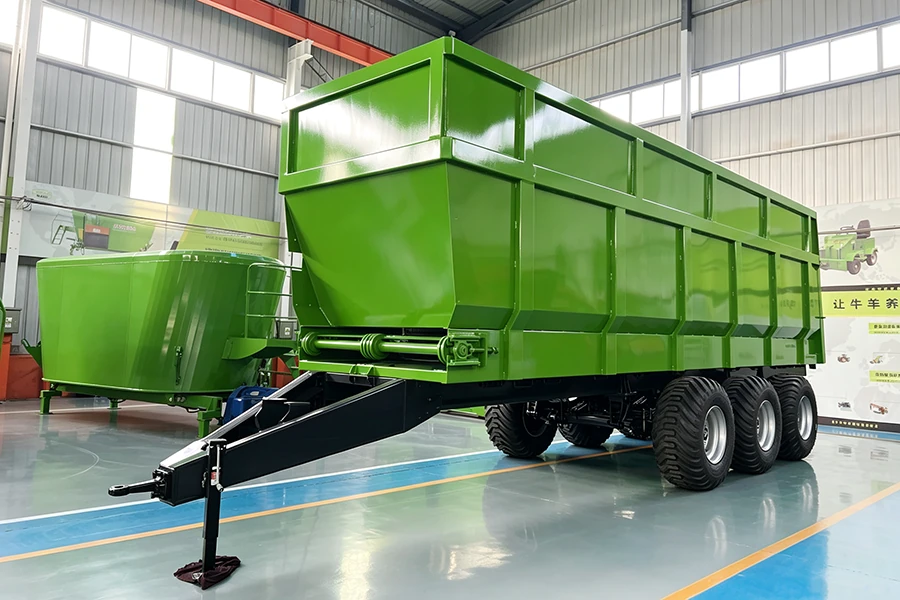
LTSZ enumera el Esparcidor de estiércol sólido within its livestock equipment portfolio. The product page records Model: 2FGH-20; Matched Power: 150-220HP; Spreading Width: 8-12m. Treat these entries as a starting point for a configuration discussion and request the current model sheet before placing an order. Confirm that the proposed livestock equipment arrangement fits the handoffs between storage, preparation, barn routes and waste reception.
Para esta aplicación, solicite al equipo que rastree un día laboral completo y registre dónde esperan los materiales, las máquinas y el personal para la siguiente tarea. Proporcione un dibujo de diseño, los ingredientes previstos para el alimento, la ropa de cama y el estiércol de la granja en sus condiciones de trabajo reales y la ventana de trabajo requerida. La cotización debe identificar las opciones incluidas, el acceso al servicio y la evidencia necesaria para la entrega. También puedes revisar el Portafolio de equipos LTSZ comprender las etapas adyacentes de alimentación y limpieza.
Compare las opciones antes de comprometerse
| Decisión | Qué comparar | Pruebas para solicitar |
|---|---|---|
| Ajuste de tareas | coordinar las tareas de preparación, entrega, acceso a los piensos y limpieza de graneros | Una ronda de trabajo completa demostrada |
| Ajuste de materiales | los ingredientes alimentarios, la ropa de cama y el estiércol de la granja en sus condiciones reales de trabajo | Condiciones del ensayo y observaciones reales |
| Ajuste del sitio | la distribución agrícola existente, la dotación de personal y las ventanas de trabajo interdependientes | Dibujo de configuración y estudio de ruta |
| Rendimiento | finalización de tareas, tiempo de cuello de botella y disponibilidad de equipos esenciales | Un registro de aceptación reproducible |
| Utilidad | superficies de contacto específicas para tareas, componentes de accionamiento y puntos de acceso de servicios | Manual, números de pieza y procedimiento de acceso |
- Mapee toda la ruta material y las personas responsables de cada traspaso.
- Mida los retrasos existentes antes de especificar reemplazos.
- Identificar el trabajo esencial que necesita un método alternativo.
- Compare las cotizaciones con un requisito operativo compartido.
Para obtener antecedentes independientes, lea Orientación de HSE sobre maquinaria agrícola. Utilice este recurso para el contexto general de planificación y mantenimiento de maquinaria. La idoneidad del producto sigue siendo específica del modelo, tarea y requisitos de destino seleccionados.
Discuta los requisitos de su granja
To discuss livestock equipment, send your farm layout, daily workload, material details and delivery destination to LTSZ. Solicite una configuración propuesta con los límites operativos, el alcance de las cotizaciones y las verificaciones de aceptación establecidas por escrito. Incluya la restricción principal identificada en esta guía para que la discusión comience con el trabajo que su granja necesita completar.
Preguntas frecuentes
What information is needed to specify livestock equipment?
To specify livestock equipment, start with coordinating feed preparation, delivery, feed access and barn-cleaning tasks, the daily workload and the available work window. Add drawings of the handoffs between storage, preparation, barn routes and waste reception, material details and the result the farm needs to verify.
How should livestock equipment performance be checked?
Evaluate livestock equipment using task completion, bottleneck time and the availability of essential equipment as the operating evidence. A practical approach is to trace one complete working day and record where materials, machines and staff wait for the next task. Record settings and conditions so the result can be compared with routine work.
Can livestock equipment be selected from capacity alone?
La capacidad debe comprobarse junto con el diseño existente de la granja, la dotación de personal y las ventanas de trabajo interdependientes. Confirmar comportamiento material, acceso, tiempo de ciclo completo y requisitos de soporte. Una cifra nominal no puede establecer cada parte de la tarea.
Which livestock equipment maintenance points need attention?
Inspeccione las superficies de contacto, los componentes de la unidad y los puntos de acceso al servicio específicos de la tarea de acuerdo con el manual exacto del modelo. Asigne responsabilidad, utilice el procedimiento de aislamiento requerido y registre las necesidades recurrentes de desgaste o ajuste.
What should a livestock equipment quotation include?
Solicite el modelo y configuración, planos, especificaciones actuales, opciones incluidas, alcance de entrega, capacitación, repuestos y términos de servicio. Acepte el método de aceptación antes de realizar el pedido.